Who was Harriet Tubman?
Harriet Tubman was an American opponent of slavery who escaped enslavement in 1849. She then returned to Maryland repeatedly to help others reach freedom. Between 1850 and 1860, she directly guided about 70 relatives and friends on roughly 13 rescue journeys through the Underground Railroad.
Her work extended beyond those journeys. She served as a nurse, scout, and spy for the Union army. She helped free more than 700 enslaved people during the Combahee River raid. Later, she supported women’s voting rights and helped establish a home for older, impoverished Black people.
What was Harriet Tubman’s real name, and where was she born?
Tubman was born Araminta “Minty” Ross around 1822 in Dorchester County, Maryland, into an enslaved family. Maryland’s official timeline identifies her birthplace as the Anthony Thompson plantation. It stood in the Peters Neck area, south of Madison.
Around 1844, she married John Tubman, a free Black man. She began using the name Harriet Tubman around that time. If you encounter Araminta Ross in accounts of her childhood, you are reading about the same person.
At about 13, she suffered a severe head injury when a two-pound weight struck her. That is approximately 0.9 kilograms. The injury affected her throughout her life, including the years when she undertook rescue journeys.
When is Harriet Tubman’s birthday?
Tubman’s birth is dated to approximately 1822. An account entry records a two-dollar payment to a midwife for her mother, Rit, on March 15, 1822. This helps establish a likely birth period. It does not prove that March 15 was her birthday.
The distinction matters when you read a precise date attached to her birth. The midwife payment is a dated record, while Tubman’s exact birthday remains uncertain. Her death date is established: March 10, 1913.
How did Harriet Tubman escape slavery?
In 1849, Tubman first attempted to escape with her brothers Ben and Henry. That attempt ended in a return. Later the same year, she escaped again, this time alone. She traveled through Maryland and Delaware before reaching Pennsylvania.
Tubman traveled at night and used the North Star to help find her way. Her escape brought her into the Underground Railroad, a network of people and shelters that helped those fleeing slavery reach freedom in the nineteenth-century United States.
Reaching Pennsylvania did not end her involvement. In December 1850, she helped rescue her niece Kessiah and Kessiah’s two children. John Bowley brought the family to Baltimore. Tubman then took them to Philadelphia.
Harriet Tubman and the Underground Railroad: how did it work?
The Underground Railroad depended on human connections and places of refuge. William Still chaired the Vigilance Committee of the Pennsylvania Anti-Slavery Society in Philadelphia. He provided Tubman with resources and contacts that helped her continue her rescue journeys.
The Fugitive Slave Act of 1850 required the capture of fugitives even in states where slavery was prohibited. Southern Ontario in Canada consequently became a more important refuge for people seeking freedom. Crossing into a state without slavery did not remove the danger of capture.
Tubman directly guided about 70 relatives and friends out of slavery between 1850 and 1860. The National Park Service also estimates that she gave another 50–60 people instructions that helped them escape independently. Those are separate forms of assistance.
The familiar claim of 300 rescues across 19 journeys overstates the documented totals. The National Park Service identifies exaggerated figures in Sarah Bradford’s biography. It supports approximately 13 journeys and 70 people directly guided instead.
Another inflated claim concerns a supposed $40,000 reward for Tubman. The National Park Service points to a known capture advertisement published on October 3, 1849. It offered $100 for her capture outside Maryland.
Details you won’t find in guidebooks
Tubman often began rescue journeys on Saturday evenings. She calculated that escape notices would not appear in newspapers until Monday. If you have ever planned an errand around opening hours, you can recognize the everyday importance of timing. Tubman used the newspaper schedule to gain time for an escape.
In 1854, she sent Jacob Jackson a coded letter. Its purpose was to tell her brothers to prepare to escape. The message shows that her rescue work involved advance communication as well as movement between places.
In summer 1857, Tubman brought her parents out of Maryland. Both were legally free by then. Her father, Ben Ross, nevertheless faced possible arrest because he was suspected of helping fugitives. Their legal freedom had not removed that immediate threat.
Her final rescue journey, in 1860, also brought loss. She learned that her sister Rachel had died. She could not rescue Rachel’s two enslaved children. This episode belongs beside the successful journeys when you consider the limits she faced.
What did Harriet Tubman do during the Civil War?
Tubman went to South Carolina in early 1862. She nursed Black soldiers and civilians, then undertook scouting and spying work for the Union army. Her wartime responsibilities therefore included both direct care and gathering information.
On June 2, 1863, she participated with Colonel James Montgomery in the Combahee River raid in South Carolina. More than 700 enslaved people gained freedom through that operation. Her scouting information helped Union vessels avoid Confederate mines and troops.
The Combahee figure belongs to a military operation. The approximately 70 people she personally guided through the Underground Railroad belong to her earlier rescue journeys. Keeping those figures separate makes the scale and setting of each part of her work clearer.
Where did Harriet Tubman live? Her house and museum
Tubman’s life connected Maryland, Pennsylvania, South Carolina, and Auburn in New York. She was born in Maryland and reached freedom in Pennsylvania. South Carolina became the setting for her wartime service. Auburn became the center of her later household and care work.
In 1859, she bought a farm with a house near Auburn from the Seward family. She made it a refuge for relatives and people in need. The property connected her family life with the practical support she continued to offer others.
The Harriet Tubman Home for the Aged opened in 1908 under the operation of the AME Zion Church. Tubman had established it to support older, impoverished Black people. In 1953, the church rebuilt one structure on the home’s grounds and opened it to the public as a museum.
For readers looking for a Harriet Tubman house or museum, that distinction is useful. The farm purchase dates to 1859. The care home began operating in 1908. The rebuilt museum structure opened in 1953. These dates describe different stages of the Auburn site’s history.
Tubman also attended women’s voting rights meetings with Susan B. Anthony. In 1896, she spoke at the first convention of the newly formed National Association of Colored Women. She died in Auburn on March 10, 1913, and was buried there in Fort Hill Cemetery.
Timeline
- Around 1822: Born Araminta Ross in Dorchester County, Maryland.
- Around 1844: Began using Harriet Tubman around her marriage to John Tubman.
- 1849: Escaped slavery and reached Pennsylvania.
- December 1850: Helped rescue Kessiah and her two children.
- 1850–1860: Guided about 70 people during approximately 13 rescue journeys.
- 1854: Sent a coded message through Jacob Jackson.
- 1857: Brought her parents out of Maryland.
- 1859: Bought a farm and house near Auburn.
- 1862: Began wartime nursing in South Carolina.
- June 2, 1863: Helped free more than 700 people in the Combahee raid.
- 1896: Spoke at women’s rights gatherings.
- 1908: The Home for the Aged opened.
- March 10, 1913: Died in Auburn.
- 1953: A rebuilt structure on the care home grounds opened as a museum.
Harriet Tubman’s 20-dollar bill and quarter: what was announced?
The Treasury Department announced on April 20, 2016, that Tubman’s portrait would appear on the 20-dollar bill. On July 30, 2026, senators Chris Van Hollen and Jeanne Shaheen called for redesign work to continue. Their statement followed Treasury Secretary Scott Bessent’s explanation that the plan was not being advanced at that time.
The United States Mint’s 2024 Tubman commemorative program consisted of three coin types: a five-dollar gold coin, a one-dollar silver coin, and a clad half dollar. A quarter was not part of that program.
FAQ
What was Harriet Tubman’s real name?
She was born Araminta “Minty” Ross. She began using Harriet Tubman around the time she married John Tubman in about 1844.
When was Harriet Tubman’s birthday?
Tubman was born around 1822. A midwife payment dated March 15, 1822, helps establish the likely timing, but it does not prove her exact birthday.
How many people did Harriet Tubman rescue?
She directly guided about 70 relatives and friends to freedom on roughly 13 rescue journeys between 1850 and 1860. She also gave escape instructions to another 50–60 people.
Was there a Harriet Tubman quarter?
The 2024 Harriet Tubman commemorative coin program contained a five-dollar gold coin, a one-dollar silver coin, and a clad half dollar. It did not include a quarter.
Sources
- Wikipedia — Harriet Tubman en.wikipedia.org
- Maryland Department of Natural Resources — Harriet Tubman Underground Railroad dnr.maryland.gov
- National Park Service — Determining Harriet Tubman’s Birth Year home.nps.gov
- National Park Service — Frequently Asked Questions nps.gov
- National Park Service — Maryland: Harriet Tubman Underground Railroad National Historical Park nps.gov
- National Park Service — Harriet Tubman and the Underground Railroad nps.gov
- National Park Service — HTubman nps.gov
- National Park Service — Myths & Facts About Harriet Tubman nps.gov
- National Park Service — Life in Freedom nps.gov
- National Park Service — People nps.gov
- National Park Service — Harriet Tubman nps.gov
- Smithsonian National Museum of African American History and Culture — The Combahee Ferry Raid nmaahc.si.edu
- National Park Service — Harriet Tubman and the 54th Massachusetts home.nps.gov
- National Park Service — Harriet Tubman Home for Aged & Indigent Negroes nps.gov
- Vikipedi — Harriet Tubman tr.wikipedia.org
- Senator Chris Van Hollen — Statement on the Harriet Tubman $20 Bill Redesign vanhollen.senate.gov
- United States Mint — 2024 Harriet Tubman Commemorative Coins usmint.gov
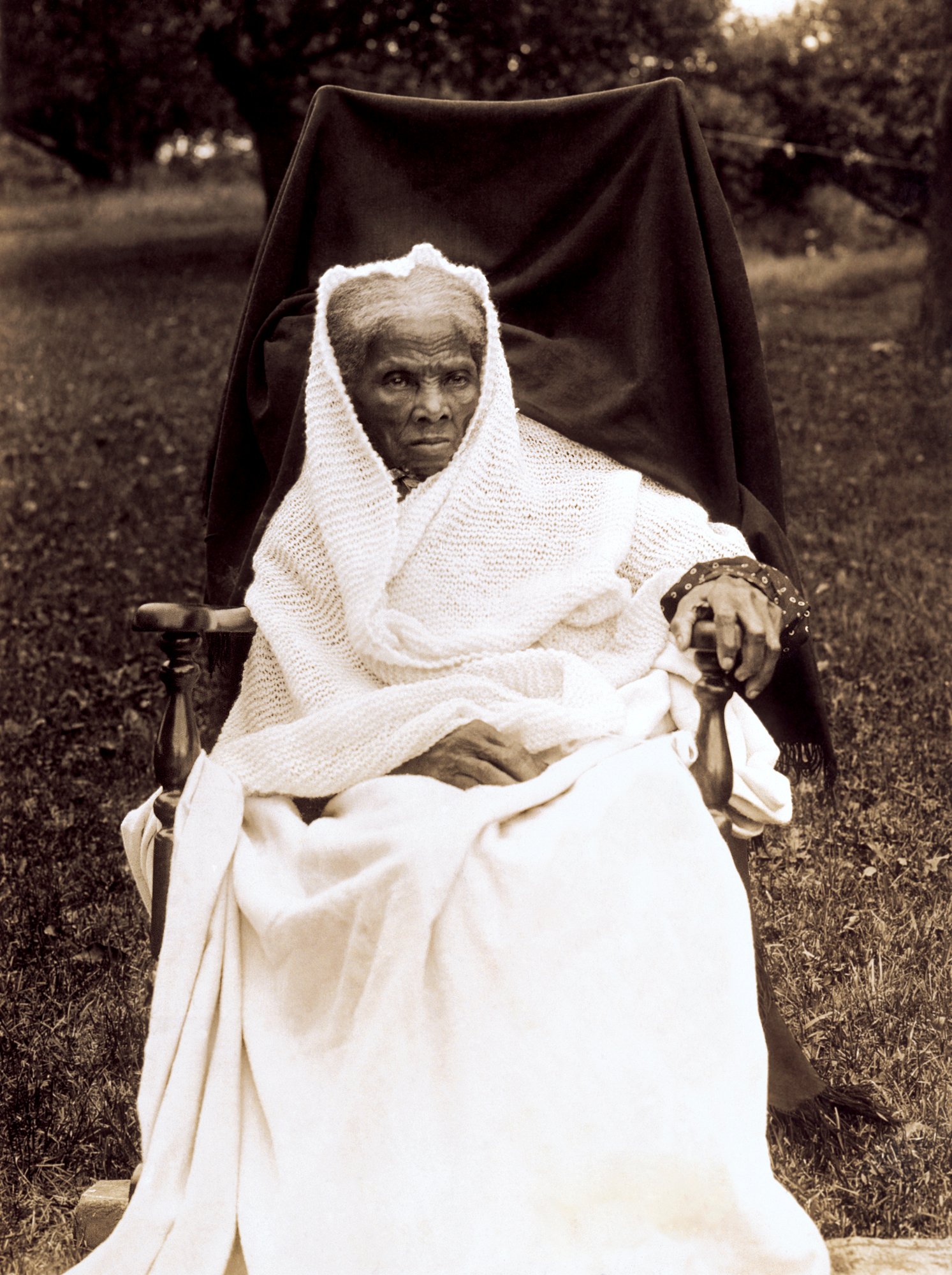
Image: Harriet Tubman late in life3.jpg — Unknown authorUnknown author, Public domain