Justinian I: Definition and Quick Facts
Justinian I, also called Justinian the Great, was an Eastern Roman emperor who ruled from 527 to 565. Turkish sources also call him Jüstinyen. The Roman numeral I is read “the First.”
He was born around 482 in Tauresium in Dardania. This place is usually identified with the area of Taor near Skopje, in today’s North Macedonia. His uncle, Justin I, adopted him and brought him to Constantinople for his education.
He became co-emperor on 1 April 527. Justin I died on 1 August 527, and Justinian then ruled alone. Remember those two dates. They explain why some books start his reign in April and others in August.
Why Was Justinian Important?
He left a mark in three areas: law, war and building.
Law. His legal collection is called the Corpus Juris Civilis. It has four parts: the Codex Justinianeus, the Digesta, the Institutiones and the Novellae. The first Codex appeared in 529. The Digesta and the law textbook Institutiones followed in 533. A revised Codex came out in 534.
War. His generals conquered the Vandal Kingdom in North Africa and the Ostrogothic Kingdom in Italy. Part of the old Western Roman lands came back under imperial rule.
Building. The best-known result is Hagia Sophia. But the story of that church begins with a disaster that almost ended his reign.
Timeline
- c. 482: Justinian is born in Tauresium.
- c. 525: He marries Theodora.
- 1 April 527: He is crowned co-emperor.
- 1 August 527: Justin I dies. Justinian rules alone.
- 529: The first Codex Justinianeus is published.
- 13 January 532: The Nika Riots begin.
- 18 January 532: Hypatios is proclaimed emperor, and the revolt ends in the Hippodrome massacre.
- 19 January 532: Hypatios and Pompeios are executed.
- 532–537: The new Hagia Sophia is built.
- 533: The Digesta and Institutiones appear.
- 534: The revised Codex appears.
- 27 December 537: Hagia Sophia opens with a ceremony.
- 548: Theodora dies.
- 558: The first dome of Hagia Sophia collapses.
- 562: The dome is rebuilt higher.
- 14 November 565: Justinian dies in Constantinople.
- 1204: His tomb is plundered by Crusaders.
What Were the Nika Riots?
The Nika Riots began on 13 January 532 in the Hippodrome of Constantinople. The Blues and the Greens, the rival chariot-racing factions, joined forces against Justinian.
Think of two football supporter groups who hate each other. One day they march together against the club’s owner. That is roughly what happened here.
The name comes from a Greek cry. “Nika” meant “Win!” or “Conquer!” Fans shouted it to urge on the racers. In 532 the crowd turned the same word into a rebel slogan.
What Set It Off
The direct trigger was an execution that went wrong. On 10 January 532, some men were hanged. Two supporters escaped the hanging, one a Blue and one a Green. The crowds demanded that both be pardoned. That demand pushed the city into revolt.
Justinian tried to give ground. The rebels demanded the removal of three officials. They were the city prefect Eudaimon, the praetorian prefect John the Cappadocian and the legal adviser Tribonian. Justinian dismissed all three. The uprising went on anyway.
Fire in the City
The fires did lasting damage. Hagia Sophia burned. So did the Church of Hagia Eirene, the palace’s bronze gate called the Chalke, and the Baths of Zeuxippos.
The church that burned in 532 was the second Hagia Sophia, opened in 415 under Theodosius II. Justinian replaced it with a third church.
Hypatios, Theodora and the End of the Revolt
On 18 January 532 the rebels proclaimed Hypatios emperor in the Hippodrome. He was a nephew of the former emperor Anastasius.
The same day, the troops of Belisarius and Mundus entered the Hippodrome through different entrances and attacked the rebels. The revolt ended there.
Hypatios and his brother Pompeios were executed the next day, 19 January 532.
Justinian I and Theodora
Theodora is the wife people search for when they look up Justinian. They married around 525 in Constantinople. The marriage lasted until her death in 548.
The Nika Riots gave her a famous role. Procopius, a historian of the time, says she spoke against fleeing the palace in January 532 and so stiffened the resistance. Be careful with this scene. The text of her speech is probably Procopius’s own rhetorical invention. The story is vivid, but you should not treat it as a recorded quotation.
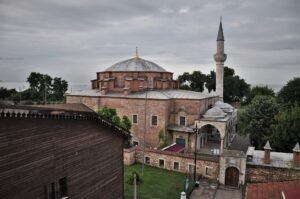
The couple also built together. Justinian and Theodora had the Church of Saints Sergius and Bacchus built in Constantinople between 527 and 536. You can visit it today as the Little Hagia Sophia Mosque.
How Justinian Built Hagia Sophia
Work on the third Hagia Sophia ran from 532 to 537. The designers were Anthemius of Tralles and Isidore of Miletus.
The new church opened with a ceremony on 27 December 537. That is less than six years after the fire. Plan your visit with that in mind. When you stand under the dome, you are looking at a building that started as a response to a crisis.
Procopius is your main contemporary witness for this reign. He described the wars in his Wars and the building projects in On Buildings.
The Dome That Fell
The story did not end in 537. The first dome collapsed in 558. It was completed again in 562, this time with a higher profile. The emperor lived to see both the fall and the repair.
Justinian I Mosaics: What Is Real and What Is Later
Two sets of mosaics carry his image, and they are easy to confuse.
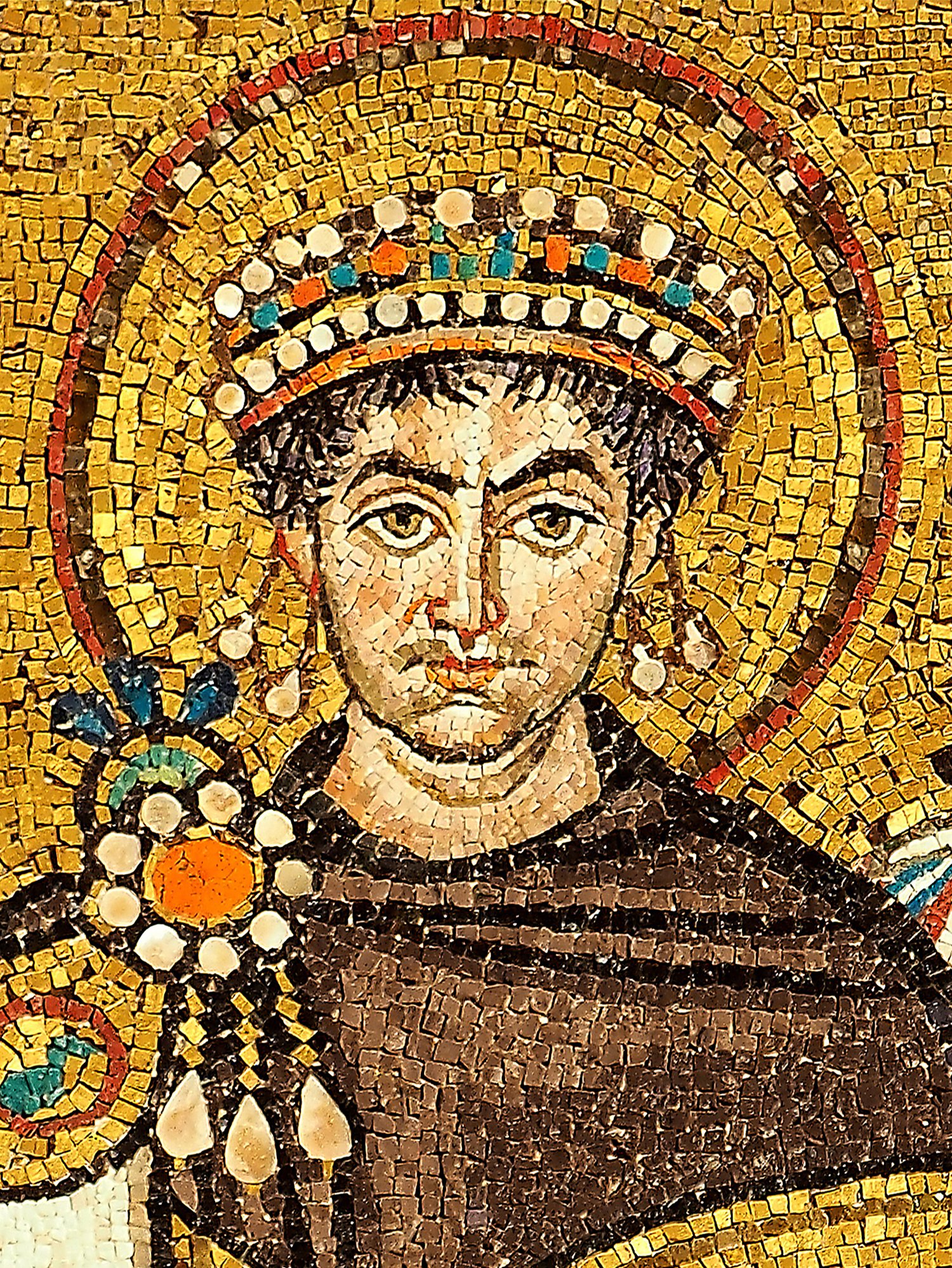
In Ravenna, the Basilica of San Vitale has 6th-century mosaics. Justinian and Theodora appear in two separate imperial panels, each with their attendants. These date from his own century.
In Hagia Sophia, a mosaic shows Justinian offering a model of the church to Mary. This one dates from the 10th century. It is not from his own lifetime. It shows how later Byzantines remembered him as the founder.
Details You Won’t Find in Guidebooks
- A pardon request lit the fuse. The Nika Riots were triggered by the demand to pardon two men who survived a hanging on 10 January 532. One was a Blue and one a Green.
- The body count is uncertain. For the Hippodrome massacre, Procopius gives more than 30,000 dead. Theophanes and the Chronicon Paschale give 35,000. These are different ancient figures. They are not verified modern counts.
- The famous donor mosaic is late. The mosaic of Justinian presenting the church to Mary is from the 10th century, not the 6th.
- The dome fell and rose again. The collapse in 558 and the higher rebuilding in 562 are part of the building’s real history.
- A museum solidus. The Museum of Byzantine Culture in Thessaloniki holds a Justinian solidus, number BN 148. It dates to 545–565, weighs 4.36 grams and measures 2.1 centimetres across.
Justinian I Coins: Solidus and Follis
Coins are the easiest way to hold his reign in your hand.
The solidus was the gold coin. According to the Metropolitan Museum of Art, Justinian became the first Byzantine emperor to adopt a fully frontal portrait on his coins, in 539.
The follis was the bronze coin. A Justinian follis in the Berlin Münzkabinett dates to 538/539 and weighs 20.64 grams. The large letter M on its back marks a value of 40 nummi.
If you collect coins or visit museums, look for that M. It tells you the value at a glance.
Justinian I Tomb
Justinian died on 14 November 565 in Constantinople. His nephew Justin II succeeded him.
He was buried in a private mausoleum at the Church of the Holy Apostles. That tomb was plundered in 1204 during the Fourth Crusade.
So you will not find his grave in Istanbul. What you can visit is the church that he rebuilt after the fire of 532.
Justinian I Empire
At the start he ruled from Constantinople over the Eastern Roman lands. Through his generals he added the former Vandal Kingdom in North Africa and the Ostrogothic Kingdom in Italy. That brought a part of the old Western Roman world back under imperial control.
FAQ
Who was Justinian I and why was he important?
Justinian I was the Eastern Roman emperor from 527 to 565. He is remembered for the Corpus Juris Civilis, for generals who conquered the Vandal Kingdom in North Africa and the Ostrogothic Kingdom in Italy, and for building the third Hagia Sophia.
What were the Nika Riots?
They were a revolt that began on 13 January 532 in the Hippodrome of Constantinople, when the Blues and the Greens united against Justinian. The fires destroyed the second Hagia Sophia. Imperial troops crushed the revolt on 18 January.
Who was Justinian’s wife?
His wife was Theodora. They married around 525 in Constantinople, and the marriage lasted until her death in 548.
Where is Justinian buried?
He was buried in a private mausoleum at the Church of the Holy Apostles in Constantinople. The tomb was plundered in 1204 during the Fourth Crusade.
When did the new Hagia Sophia open?
It opened with a ceremony on 27 December 537. Its first dome collapsed in 558, and a higher dome was completed in 562.
Sources
- Wikipedia — Justinian I en.wikipedia.org
- Kültür ve Turizm Bakanlığı — Batı Roma’dan Doğulu Bizans’a ekitap.ktb.gov.tr
- Encyclopaedia Iranica — Justinian I iranicaonline.org
- University of Chicago — Encyclopaedia Romana: The Nika Riot penelope.uchicago.edu
- Geoffrey Greatrex — History of Istanbul: The Nika Riot istanbultarihi.ist
- The Metropolitan Museum of Art — The Byzantine State under Justinian I metmuseum.org
- The Metropolitan Museum of Art — Hagia Sophia, 532–37 metmuseum.org
Image: Mosaic of Justinianus I – Basilica San Vitale (Ravenna).jpg — Petar Milošević, CC BY-SA 4.0