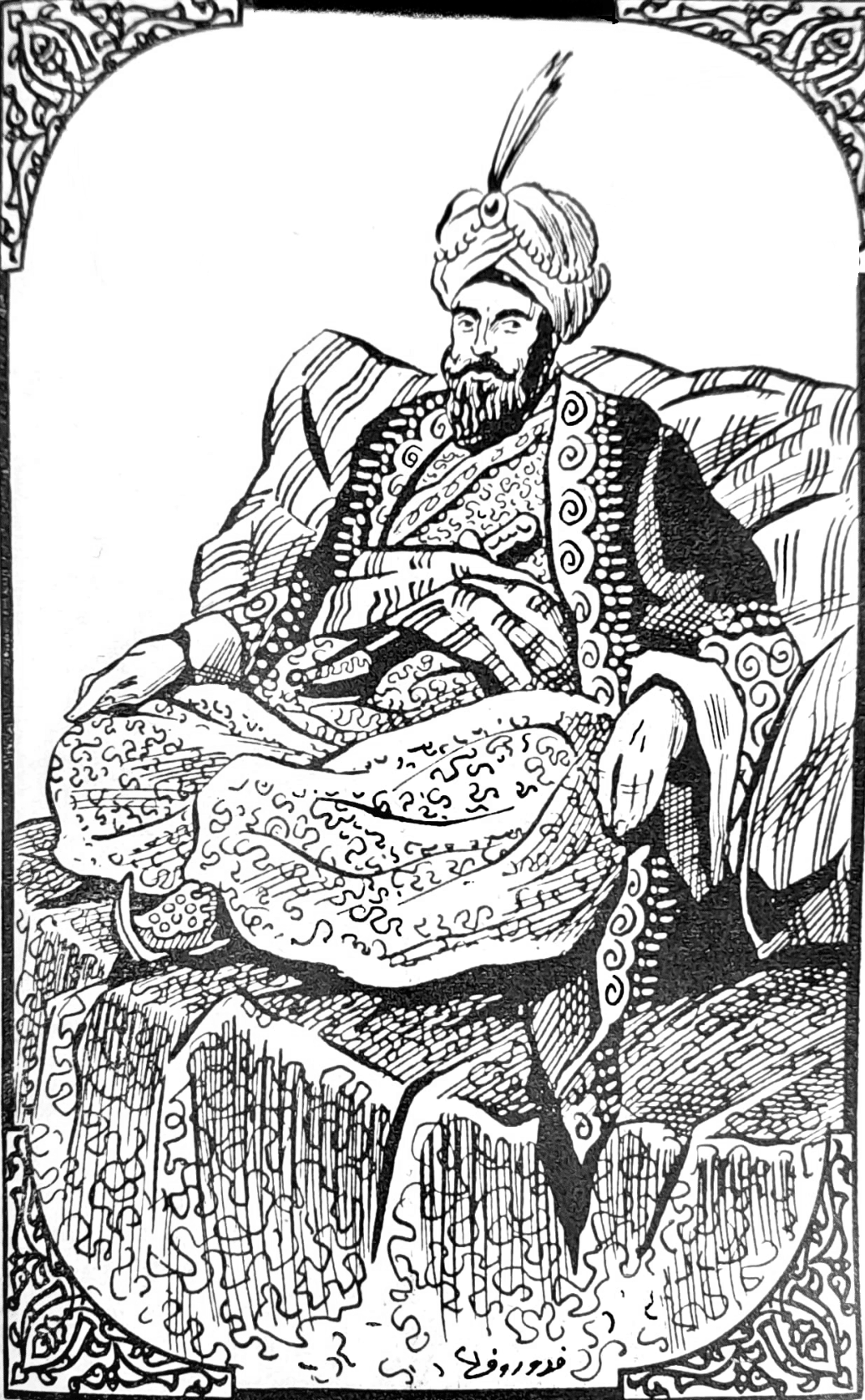
Harun al-Rashid was the fifth Abbasid caliph. He ruled from 14 September 786 until 24 March 809. He also became a character in the Arabian Nights, where some stories take place at his court. That literary presence connects a historical ruler with a fictional world.
If you know Harun through the Arabian Nights, his reign brings a different set of events into view. He commanded campaigns against Byzantium, relied on powerful ministers, and faced serious rebellions. He also arranged his sons’ succession. After his death, that arrangement failed to prevent civil war.
Harun al-Rashid’s history: where was he born?
Harun was born in Rayy, in either 763 or 766. His birth year remains disputed. Historian Clifford Edmund Bosworth considered 766 more likely. His judgment rested on records concerning Harun’s age when he became caliph.
His father was the Abbasid caliph al-Mahdi. His mother was al-Khayzuran bint Ata. The statesman Yahya ibn Khalid al-Barmaki, who was of Iranian origin, supervised his childhood education. Yahya’s involvement continued into Harun’s political career and eventual reign.
Before becoming caliph, Harun led Byzantine campaigns in 780 and 782. The second reached the surroundings of Constantinople on its Anatolian side. Following these campaigns, he received the epithet al-Rashid, meaning “the rightly guided.” The name remembered through the stories therefore also belongs to his military career.
In 782, Harun received governorships covering North Africa, Egypt, Syria, Armenia, and Azerbaijan. Yahya al-Barmaki carried out the actual administration of these regions. Harun became caliph in 786 after the death of his elder brother, Musa al-Hadi.
Harun al-Rashid stories and the Arabian Nights book
Some stories in the Arabian Nights use Harun’s court as their setting. The caliph himself appears as a fictional character. When you encounter him in the book, you are reading a literary portrayal of a ruler whose historical reign lasted from 786 to 809.
The difference matters when considering the splendour associated with his court. Sonja Brentjes describes those same years as a period of serious revolts against caliphal authority. The magnificent portrayal in the Arabian Nights therefore needs to be read alongside a reign troubled by resistance.
Another court story concerns the fall of the Barmakid family. It connects Ja‘far al-Barmaki with Harun’s sister Abbasa through an alleged marriage. Encyclopaedia Iranica describes this account as embellished. Other proposed explanations, including jealousy over wealth and court intrigue, also remain uncertain.
The events of 803 are firmer ground. Ja‘far was killed, while Yahya and his son Fadl were imprisoned. The alleged marriage offers a dramatic explanation, but its embellished character prevents it from serving as a settled account of the purge.
Who governed alongside Harun al-Rashid?
Yahya al-Barmaki became Harun’s vizier. Together with his sons Fadl and Ja‘far, he played a decisive role in governing the empire during the first 17 years of the reign. The family’s influence followed Yahya’s earlier responsibilities for Harun’s education and provincial administration.
Their fall in 803 ended that long period of influence. Ja‘far’s execution and the imprisonment of Yahya and Fadl marked a sharp change in the government. The contrast is concrete: men who had helped administer the empire became targets of the caliph’s action.
Regional government also involved negotiated arrangements. In 800, Harun entrusted the administration of Ifriqiya to Ibrahim ibn al-Aghlab in exchange for an annual payment. This was another form of rule within his reign, alongside the central importance of the Barmakid ministers.
Harun al-Rashid and places in Turkey
For travelers to Turkey, Tarsus offers a direct connection with Harun’s government. In 787–788, he ordered its reconstruction and fortification. He assigned Harthama ibn A‘yan to carry out the work. The connection concerns a specific building and defensive programme ordered early in his reign.
Konya Ereğlisi provides another geographical link. In the campaign of 806, Abbasid forces captured Herakleia, identified as present-day Konya Ereğlisi. If you are connecting historical names with places on a Turkish itinerary, Herakleia and Ereğlisi belong together in this episode.
His earlier campaign of 782 had reached the Anatolian surroundings of Constantinople. Taken with the work at Tarsus and the capture of Herakleia, this places Anatolia repeatedly within his military history. These episodes span his career before and after he became caliph.
Harun al-Rashid’s wife and family tree
Harun’s wife Zubayda bint Ja‘far was the mother of Muhammad al-Amin. Al-Amin succeeded his father as caliph. Two other sons had different mothers: al-Ma’mun’s mother was Marajil, while al-Mu‘tasim’s mother was Marida. Both women were enslaved concubines.
For a simple family tree, begin with Harun’s parents, al-Mahdi and al-Khayzuran. His elder brother was Musa al-Hadi. His sons included al-Amin, al-Ma’mun, al-Qasim, and al-Mu‘tasim. His succession arrangement concerned al-Amin, al-Ma’mun, and al-Qasim.
Zubayda’s name also survives through the Darb Zubayda pilgrimage road. The route connected Kufa with Mecca across approximately 1,300 kilometres. It bears her name because she supported charitable works along it. Her historical presence extends beyond being the mother of Harun’s successor.
In everyday terms, her support addressed where people could stop during a long journey. She personally paid for many intermediate stopping places serving pilgrims on foot. These supplemented a pilgrimage route whose arrangements accommodated riding animals. The distinction mattered to travelers making the journey without a mount.
Books, the palace library, and translation
A palace library established during Harun’s reign forms part of his cultural history. Its scope remains debated. Dimitri Gutas challenged the interpretation that treats it as a comprehensive centre for Greek translation. His assessment stresses that the available evidence points mainly toward Persian translations.
A specific account nevertheless concerns a translation. According to Ibn al-Nadim, the library’s director Salm and Abu Hassan commissioned translators for Ptolemy’s Almagest. That reported commission provides a concrete example, while the wider scale and character of the library remain subjects of debate.
Details you won’t find in guidebooks
Despite his close association with Baghdad, Harun moved his administrative centre to Raqqa-Rafiqa in 796. The new centre stood beside the Euphrates. Baghdad’s prominence in his image can therefore obscure a documented relocation during his reign.
During his pilgrimage in 802, Harun had a document regulating his sons’ succession hung on the wall of the Kaaba. The arrangement concerned al-Amin, al-Ma’mun, and al-Qasim. Its formal presentation did not prevent the civil war between brothers that followed his death.
A gold dinar in the British Museum offers a smaller trace of his government. Dated 793, it bears Ja‘far al-Barmaki’s name. The coin measures 18 millimetres across and weighs 4.170 grams. Its museum registration number is 1933,0415.8.
That coin predates Ja‘far’s execution in 803. Read beside the account of the Barmakid purge, its inscription places his name on an object from the years of the family’s influence. You can connect a surviving coin with a specific minister and the later collapse of his position.
Timeline
- 763 or 766: Born in Rayy; the year is disputed.
- 780: Appointed to lead a Byzantine campaign.
- 782: His second Byzantine campaign reached the Anatolian surroundings of Constantinople.
- 786: Succeeded his elder brother al-Hadi as caliph.
- 787–788: Ordered the reconstruction and fortification of Tarsus.
- 796: Moved his administrative centre to Raqqa-Rafiqa.
- 800: Entrusted Ifriqiya to Ibrahim ibn al-Aghlab in return for an annual payment.
- 802: Documented his sons’ succession arrangement during his pilgrimage.
- 803: Purged the Barmakid family.
- 806: Abbasid forces captured Herakleia; Rafi‘ ibn al-Layth’s rebellion began in Samarkand.
- 24 March 809: Died near Tus; al-Amin succeeded him.
Rebellion, death, and succession
In 806, Rafi‘ ibn al-Layth’s rebellion began in Samarkand. It spread into Khurasan and became a principal reason for Harun’s final eastern expedition. This uprising belongs to the same year as the Abbasid capture of Herakleia during his Byzantine campaign.
Harun died near Tus on 24 March 809 while traveling to intervene against the eastern rebellion. Al-Amin succeeded him. The succession system prepared for al-Amin, al-Ma’mun, and al-Qasim failed to prevent the subsequent civil war between brothers.
FAQ
When did Harun al-Rashid rule?
Harun al-Rashid ruled as the fifth Abbasid caliph from 14 September 786 until 24 March 809. He succeeded his elder brother Musa al-Hadi.
Where was Harun al-Rashid born?
He was born in Rayy in either 763 or 766. Historian Clifford Edmund Bosworth considered 766 more likely because of records concerning his age at accession.
Who was Harun al-Rashid’s wife?
His wife Zubayda bint Ja‘far was the mother of Muhammad al-Amin, who succeeded him. The Darb Zubayda pilgrimage road bears her name because she supported charitable works along its route.
Was Harun al-Rashid a real person in the Arabian Nights?
Harun al-Rashid was a historical Abbasid caliph. Some Arabian Nights stories use his court as their setting and portray him as a fictional character.
Sources
- Turkish Wikipedia — Harun Reşid tr.wikipedia.org
- Encyclopaedia Iranica — Hārun al-Rašid iranicaonline.org
- TDV İslâm Ansiklopedisi — Hârûnürreşîd islamansiklopedisi.org.tr
- English Wikipedia — Harun al-Rashid en.wikipedia.org
- McGill University — Sonja Brentjes, Hārūn al-Rashīd islamsci.mcgill.ca
- Encyclopaedia Iranica — Barmakids iranicaonline.org
- UNESCO World Heritage Centre — Darb Zubaydah whc.unesco.org
- British Museum — Gold dinar, 1933,0415.8 britishmuseum.org
Image: Harun Al-Rashid on the Takht.png — Unknown authorUnknown author, Public domain