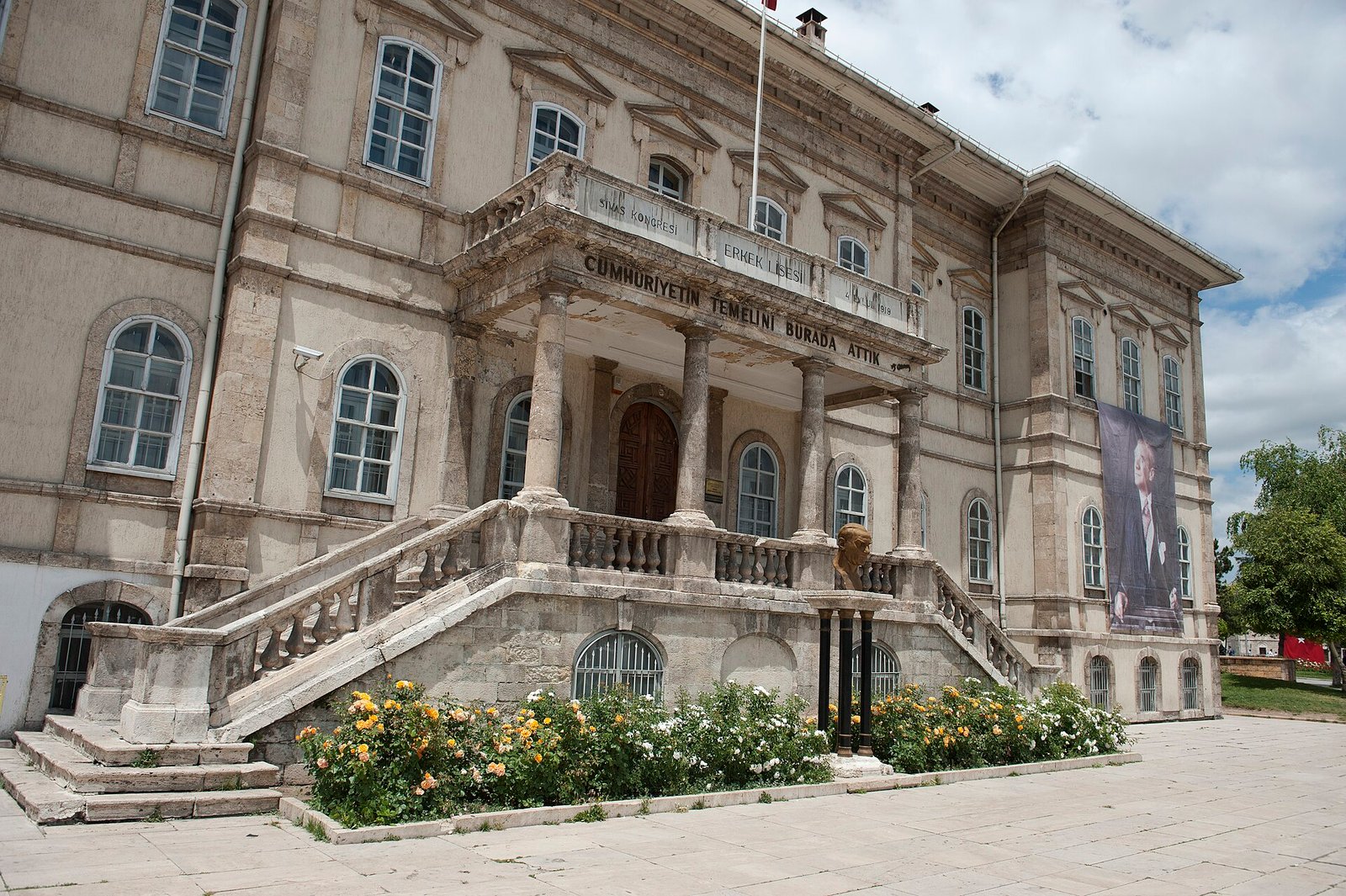
The Sivas Congress met from 4 to 11 September 1919. Its aim was to organize the National Struggle across the whole country. Its best-known decision is the rejection of mandate and protectorate. In plain terms, the delegates refused to place the country under the guidance of a foreign power.
This article explains how the congress came about, what it decided, and what you can see in Sivas today.
What was the Sivas Congress?
The Sivas Congress was a national gathering held in Sivas from 4 to 11 September 1919. It was called to give the National Struggle a country-wide organization.
The idea was announced earlier. Mustafa Kemal Pasha’s Amasya Circular of 22 June 1919 said that a national congress would meet in Sivas. The circular also asked for about three representatives to be sent to it. They were to be people who had won the nation’s trust, chosen without regard to party.
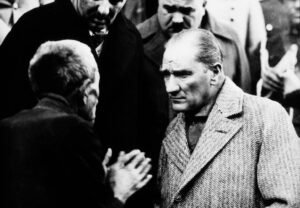
Mustafa Kemal Pasha reached Sivas on 2 September 1919, after leaving Erzurum. The congress opened two days later, on 4 September. Delegates elected him chairman.
Why was Sivas chosen?
Three reasons shaped the choice:
- Sivas was far from the occupied regions.
- Entries and exits could be monitored.
- The 3rd Corps was stationed there.
For a meeting that needed calm and security, these points mattered more than size or fame.
Rejecting foreign mandate: what the delegates decided
The congress built on the Erzurum Congress. It adopted Erzurum’s decisions on the integrity and independence of the homeland and applied them to the whole country.
The main decisions were these:
- No mandate or protectorate. The congress rejected both.
- An indivisible homeland. Within the national borders, the homeland was accepted as one whole that cannot be divided.
- A guiding principle. National power was to be made effective, and national sovereignty was to prevail.
- A call to Istanbul. The congress demanded that the Ottoman Chamber of Deputies (the Mebusan Meclisi) be convened immediately.
The mandate question was not decided in one sentence. On 8 and 9 September 1919, delegates debated an American mandate. In the end, the congress accepted a proposal by Rauf Bey. He suggested asking the American Senate to send an inspection delegation.
The final declaration of 11 September 1919 was not a call to cut off the outside world. Its seventh article said that technical, industrial and economic help could be accepted from abroad, as long as independence and territorial integrity were preserved.
The declaration also dealt with non-Muslim communities. It said their rights would be protected. It rejected privileges that would damage political sovereignty or the social balance.
One organization for the whole country
Before Sivas, resistance was scattered across many local societies. The congress united the national resistance societies under one name: the Anatolia and Rumelia Defence of Rights Society.
The Representative Committee (Heyet-i Temsiliye) was also enlarged. Its membership rose to 16, so that it could represent the whole homeland. The congress also decided that Ali Fuat Pasha would take command of the Western Anatolian national forces (Kuvayımilliye).
Think of a neighbourhood where every street has its own watch group. They only become a real system when they share one list of names and one chain of command. That is roughly what the congress did for the resistance societies.
Who sat in the congress?
The exact number of delegates is disputed. The Turkish Wikipedia article reports different counts, such as 31, 33 and 38. It adds that latecomers brought the total to 41.
Timeline
- 1892: The Sivas idadi (secondary school) building, where the congress would later meet, was built.
- 22 June 1919: The Amasya Circular announced a national congress in Sivas.
- 2 September 1919: Mustafa Kemal Pasha arrived in Sivas.
- 4 September 1919: The congress opened and Mustafa Kemal Pasha was elected chairman.
- 8–9 September 1919: Delegates debated an American mandate.
- 11 September 1919: The congress published its final declaration.
- 12 September 1919: The decisions were announced at a meeting open to the public.
- 14 September 1919: The first issue of the İrade-i Milliye newspaper appeared.
- 18 December 1919: The building’s period as the Representative Committee’s headquarters ended.
- 19 December 1990: The building opened as the Atatürk Congress and Ethnography Museum.
- 23 October 2018: It was reorganized as the Atatürk and Congress Museum.
The Sivas Congress museum today
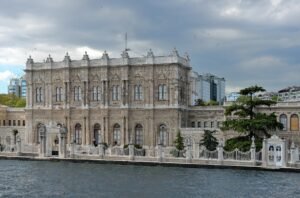
If you are travelling to Sivas, the museum is the place to start. The congress did not meet in a palace. It met in the building of the Sivas Sultani school, a state secondary school. Anyone who has sat in a school classroom will recognize the kind of building it was.
The Sivas governor, Mehmet Memduh Bey, had it built in 1892 as an idadi. During and after the congress, Mustafa Kemal Pasha and the Representative Committee used it as the headquarters of the National Struggle. They stayed from 2 September to 18 December 1919, a total of 108 days.
The building began to serve visitors on 19 December 1990 under the name Atatürk Congress and Ethnography Museum. On 23 October 2018 it was reorganized as the Atatürk and Congress Museum, a unit under the Sivas Museum Directorate.
Sivas Congress and Ethnography Museum: why the name changed
You may still see the older name, Sivas Congress and Ethnography Museum. It reflects the museum’s earlier form, which combined the congress story with an ethnography section.
During the renovation, the ethnography section was removed. The displays now concentrate on the National Struggle and the Sivas Congress. That is why the current name mentions only Atatürk and the congress.
What happened after the congress
The decisions were published on 11 September 1919 in the final declaration. On 12 September they were announced at a meeting that the public attended.
Two days later, on 14 September 1919, the first issue of İrade-i Milliye appeared in Sivas. The paper was issued in line with the congress decisions. Its publishing licence was taken out in the name of Demircioğlu Selahattin. Mazhar Müfit Kansu served as managing editor.
Details you won’t find in guidebooks
- A day off for the holiday. The congress held no session on 6 September 1919. It was the first day of the Feast of Sacrifice (Kurban Bayramı).
- A veterinary stamp. Sivas Provincial Veterinary Office’s seal was used to get İrade-i Milliye to Istanbul.
- A paper that grew. İrade-i Milliye began as a weekly. It later came out twice a week and then daily.
- An entrance that moved. The building has three floors and an inner courtyard. During the 1930 renovation, its main entrance was moved from the east facade to the west facade.
- A smaller museum. The ethnography section was dropped in the renovation. The displays now focus on the National Struggle and the congress.
FAQ
When was the Sivas Congress held?
It met in Sivas from 4 to 11 September 1919. It opened on 4 September, and the final declaration was published on 11 September.
Who chaired the Sivas Congress?
Mustafa Kemal Pasha was elected chairman when the congress opened on 4 September 1919.
Did the Sivas Congress reject a foreign mandate?
Yes. Rejecting mandate and protectorate was among its decisions. The delegates also treated the homeland within the national borders as an indivisible whole.
Where is the Sivas Congress museum?
The museum is in the historic school building in Sivas where the congress met. Since 23 October 2018 it has been called the Atatürk and Congress Museum and is a unit of the Sivas Museum Directorate.
What was the Anatolia and Rumelia Defence of Rights Society?
It was the single body formed at Sivas by uniting the national resistance societies under one name.
Sources
- Vikipedi — Sivas Kongresi tr.wikipedia.org
- Atatürk Ansiklopedisi — Sivas Kongresi ataturkansiklopedisi.gov.tr
- Millî Savunma Bakanlığı — Millî Mücadele Dönemi ata.msb.gov.tr
- Wikipedia — Sivas Congress en.wikipedia.org
- Atatürk Araştırma Merkezi — Sivas Kongresi’nin 102. Yıl Dönümü atam.gov.tr
- Anadolu Ajansı — Sivas Kongresi 107 yaşında aa.com.tr
- Atatürk Ansiklopedisi — İrade-i Milliye Gazetesi ataturkansiklopedisi.gov.tr
- Kültür ve Turizm Bakanlığı DÖSİMM — Sivas dosim.ktb.gov.tr
- Kültür ve Turizm Bakanlığı — Kongre Binası Atatürk ve Etnografya Müzesi kirsehir.ktb.gov.tr
- Kültür ve Turizm Bakanlığı — Sivas Kongre Binası ktb.gov.tr
Image: Atatürk Congress and Ethnography Museum in Sivas 8135.jpg — Dosseman, CC BY-SA 4.0