Mansa Musa history: who was he?
Mansa Musa ruled the Mali Empire in West Africa from about 1312 to 1337. He belonged to the Keita dynasty.
The word “Mansa” is not part of his personal name. In the Mandingo language, Mense or Mansa means sultan. It is a ruler’s title, as the Turkish encyclopedia of Islam (TDV) explains.
His birth date is unknown. You will often see “about 1280” in biographies, but that is an estimate, not a recorded birth.
This matters for the gold story. Many popular posts treat Musa as a legend with exact numbers. The sources give you a more careful picture, and it is still impressive.
Where did Mansa Musa live and where was he from?
Musa was from the Mali Empire in West Africa. That was the land he ruled. His cities included Timbuktu and Gao.
He turned both into important cultural centers. National Geographic says he brought architects from Africa and the Middle East to work on buildings in his cities.
So the short answer is simple. He lived and ruled in West Africa, and he traveled to Cairo and Mecca once on a famous pilgrimage.
Mansa Musa wealth: where did the gold come from?
Musa did not invent his fortune. National Geographic notes that he inherited a rich kingdom when he took the throne in 1312. He then expanded trade and grew that power.
Three sources of money stand out:
- Gold. Mali traded gold from Bambuk and Bure.
- Salt. Musa’s state controlled and taxed the salt trade coming from the north.
- Ivory. National Geographic lists ivory trade next to gold and salt as a major source of wealth.
Think of a toll road. The owner does not need to make every item sold on it. He earns by controlling the route. Mali’s rulers did something similar with gold and salt.
Mansa Musa religion: what did he believe?
Musa was a Muslim ruler of the Maliki school of law. He invited Maliki jurists to his country.
A detail the guidebooks skip comes from the TDV encyclopedia. In Cairo, Musa stood before the Mamluk Sultan al-Nasir Muhammad. He was asked to bow to the ground. He answered that he could not prostrate himself to anyone but God.
Another small detail: Musa knew Arabic, yet he spoke with Mamluk officials through an interpreter. That is recorded by the Boston University African Studies Center.
The 1324–1325 hajj: the journey that made Mali visible
In 1324–1325 Musa went on pilgrimage to Mecca by way of Cairo. This trip made Mali’s wealth visible across North Africa and the Middle East.
You may have read that his caravan had 60,000 people. Treat that number with caution. Historians describe the figures for his caravan and his gold as stories, not audited counts.
One thing is firm in the sources. The caravan did not consist only of the ruler and willing pilgrims. National Geographic points out that enslaved people were part of it. Remember that when you read the glittering versions of the story.
How the richest man crashed gold prices
The main source here is al-Umari, who wrote between 1342 and 1349. He says Musa gave gold gifts to Cairo’s court emirs and state officials. His entourage also spent heavily in the markets.
The result, al-Umari reports, was a drop in what gold was worth. Before the visit, a mithqal of gold was worth at least 25 silver dirhams in Egypt. Afterward it was worth 22 dirhams or less.
That is a fall of about 12 percent. The explanation is basic supply and demand. More gold in the market meant each piece bought less.
Note what was measured. The recorded figure is the price of gold in silver. It is not an index of all prices in Egypt.
Now picture a currency exchange booth at a busy airport. If suddenly a crowd hands over the same foreign cash, the booth gives you fewer coins per note. Cairo’s gold market worked in a similar way, only with gold and silver.
The claim of 12 years
Al-Umari is also said to claim that gold stayed low in Egypt for about 12 years. Treat this as a claim, not a proven fact.
The other view
Historian Warren Schultz disagrees with the idea of a collapse. He places the gold price drop within the ordinary swings of Mamluk Egypt. In his reading, the economy did not crash.
There is a source caution too. Al-Umari probably did not meet Musa himself. His account rests on information from people who had met him.
So the fair summary is this. A drop of about 12 percent in gold against silver is reported. A wrecked Egyptian economy is not established.
What happened next: debts and land in Mecca
Musa ran out of money on the way home. The TDV encyclopedia says he had to borrow from merchants in Cairo to get back to Mali.
The same source records that he bought land and houses in Mecca for pilgrims coming from his country.
So the man known for giving away gold also borrowed to travel home. That detail rarely makes it into social media posts.
Mansa Musa net worth, net worth today and in rupees
A figure of about 400 billion dollars is often repeated. It was published by Celebrity Net Worth in 2012. Historians the BBC interviewed said his fortune cannot be turned into an exact number.
The same goes for any conversion into rupees or today’s dollars. No reliable calculation exists. A rupee figure would just be a guess dressed up as a fact.
Buildings and maps: how his fame lasted
UNESCO links the first building of the Djingareyber Mosque in Timbuktu to Musa’s activities on his return from Mecca.
Be careful when you look at the mosque today, though. UNESCO says Imam al-Aqib rebuilt and enlarged it between 1570 and 1583. The present structure is not entirely from Musa’s time.
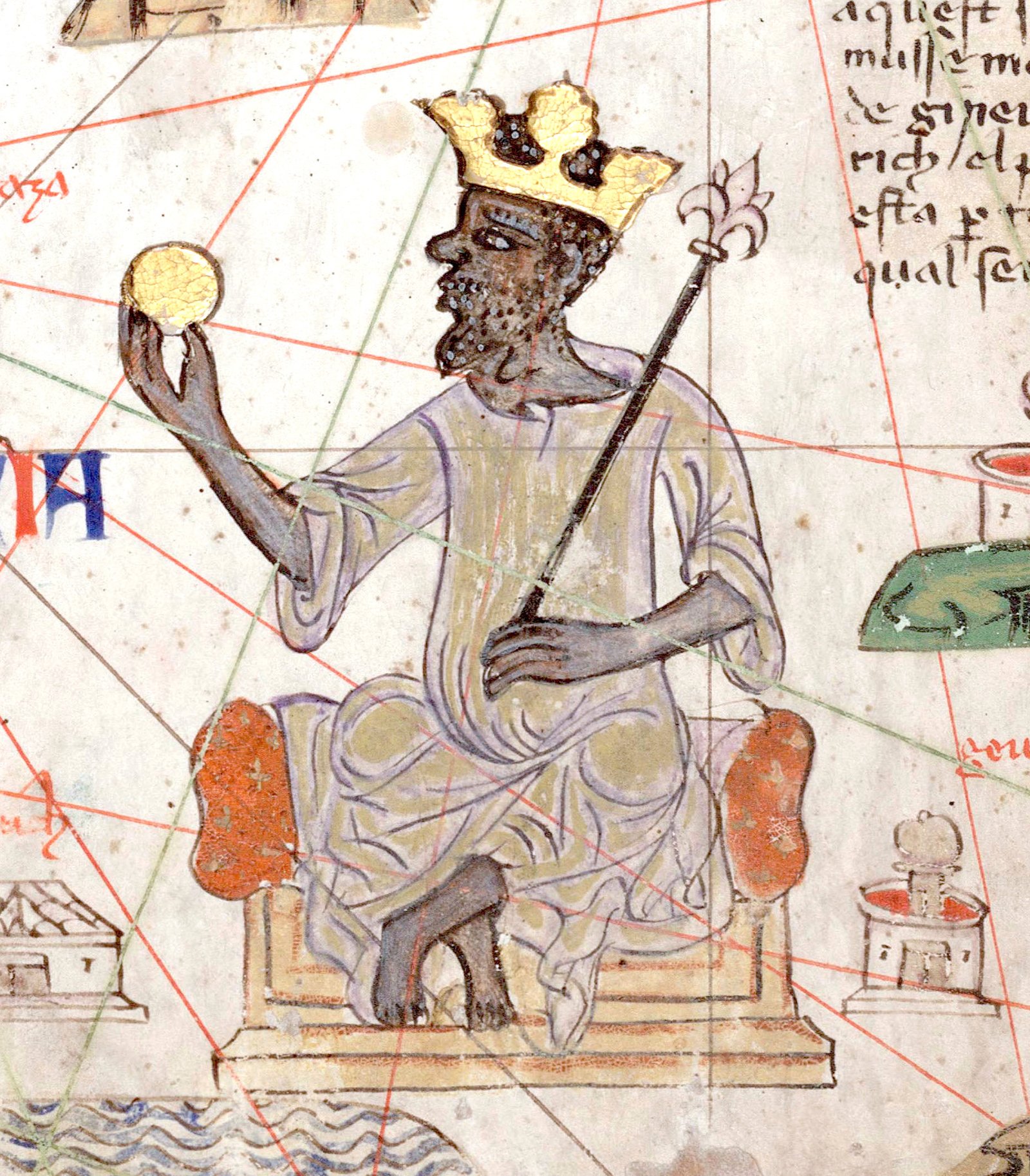
His image also traveled to Europe. According to the Metropolitan Museum of Art, the Catalan Atlas of 1375 shows Musa crowned and holding a gold object. It carried Mali’s wealth into European mapmaking.
Timeline
- About 1280: Estimated birth date. There is no firm birth record.
- About 1312: Musa takes the throne of Mali.
- 1324–1325: He goes on pilgrimage to Mecca by way of Cairo. His gold gifts and spending in Cairo draw attention.
- On the return: He borrows from merchants in Cairo. After returning to Mali, he supports religious and cultural building.
- 1332 or about 1337: Musa dies. The date depends on how sources are read.
- 1342–1349: Al-Umari writes his account, using testimony about the Cairo visit.
- 1375: The Catalan Atlas shows Musa holding gold.
- 1570–1583: Imam al-Aqib rebuilds and enlarges the Djingareyber Mosque.
Details you won’t find in guidebooks
- Musa knew Arabic but used an interpreter with Mamluk officials in Cairo.
- He refused to bow to the ground before Sultan al-Nasir Muhammad. He said he could bow only to God.
- He had to borrow money from Cairo merchants to get home.
- He bought land and houses in Mecca for pilgrims from his own country.
- The famous gold-price number is measured in silver dirhams, not in a price index of all goods.
- The mosque you see in Timbuktu was rebuilt in the 1570s and 1580s.
Mansa Musa cause of death
The cause is not known. The records are unclear, so no specific disease or killing can be given as the established reason.
Even the date is disputed. A calculation from the lengths of reigns supports 1332. An account of an embassy connected with the conquest of Tlemcen supports 1337.
Mansa Musa family today
Musa was succeeded by his son Maghan. That is the solid part.
The sources do not give a verified family tree reaching to people alive now. Be wary of websites claiming to name his living descendants.
FAQ
Did Mansa Musa really crash gold prices?
Partly. Al-Umari says a mithqal of gold fell in Cairo from at least 25 silver dirhams to 22 or less, about 12 percent. Historian Warren Schultz reads this as ordinary Mamluk-era fluctuation, not a collapse.
What was Mansa Musa’s net worth?
No one can say. A figure of about 400 billion dollars was published by Celebrity Net Worth in 2012. Historians interviewed by the BBC said his wealth cannot be reduced to an exact number.
Sources
- Vikipedi — Mansa Musa tr.wikipedia.org
- Wikipedia — Mansa Musa en.wikipedia.org
- TDV İslâm Ansiklopedisi — Mense Mûsâ islamansiklopedisi.org.tr
- National Geographic Society — Mansa Musa (Musa I of Mali) education.nationalgeographic.org
- Boston University African Studies Center — Kingdom of Mali bu.edu
- N. Levtzion — The Thirteenth- and Fourteenth-Century Kings of Mali cambridge.org
- Habertürk / BBC — Mansa Musa: Dünyanın gelmiş geçmiş en zengin insanı haberturk.com
- UNESCO World Heritage Centre — Timbuktu whc.unesco.org
- The Metropolitan Museum of Art — The Trans-Saharan Gold Trade metmuseum.org
Image: Catalan Atlas BNF Sheet 6 Mansa Musa (cropped).jpg — attributed to Abraham Cresques, Public domain