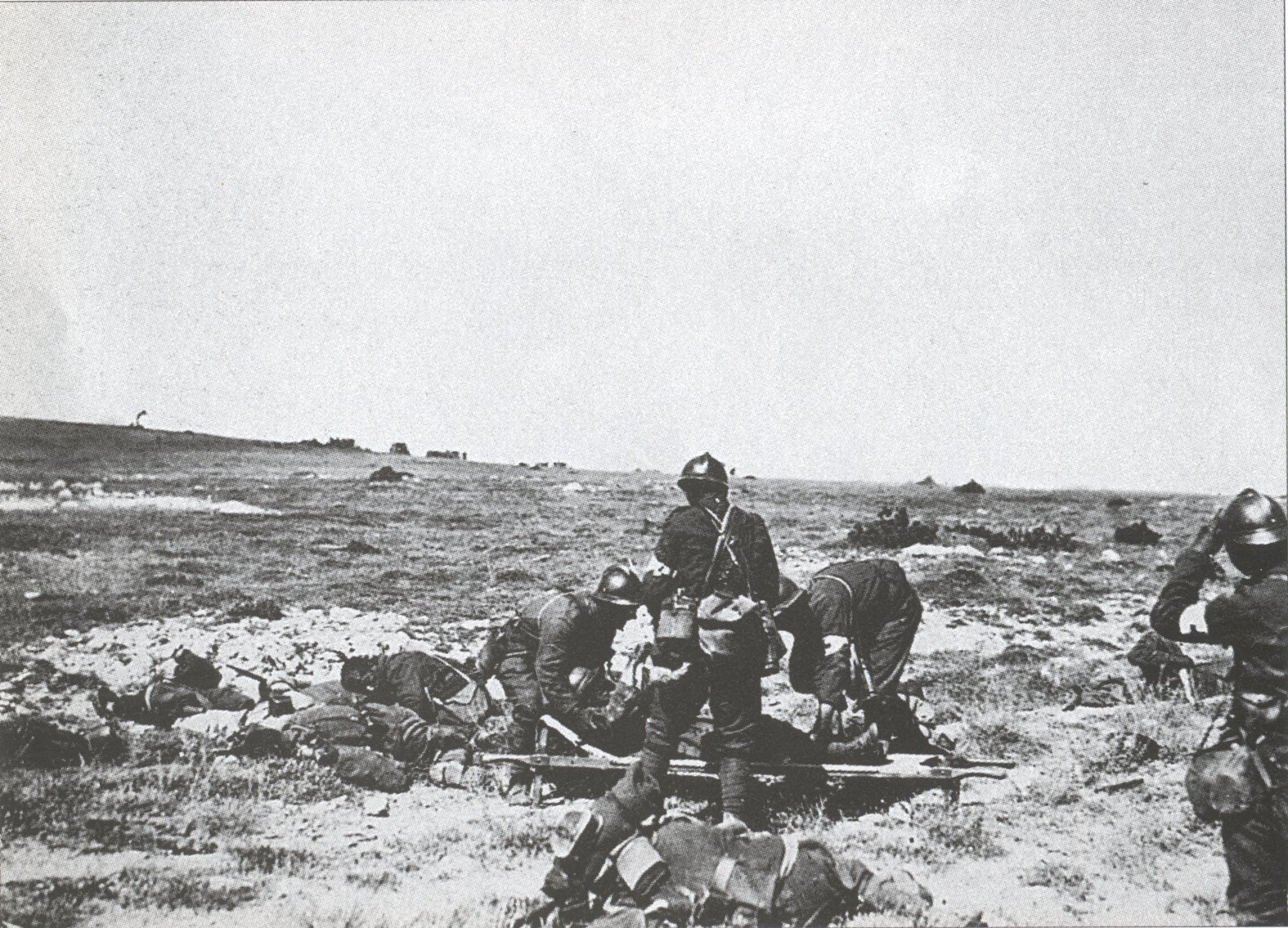
If you stand on the plains around Polatlı today, you see wheat fields, low hills and a wide sky. In the late summer of 1921, the same ground held two armies. The fight there lasted 22 days and nights, from 23 August to 13 September 1921. It is known as the Battle of Sakarya, or the Sakarya Pitched Battle (Sakarya Meydan Muharebesi).
The battle took place around the Sakarya River, near the Polatlı district of today’s Ankara. The front ran for about 100 kilometers. In places the battlefield was 20 to 25 kilometers deep. This guide explains how the battle unfolded, who led it, which order shaped it and what you can still see on the ground.
Why the Battle of Sakarya matters
Greek forces moved toward Ankara, the seat of the Grand National Assembly (TBMM). At one point during the battle, some Greek units came within about 50 kilometers of the city. Then the advance stopped. The Greek army withdrew, and the assembly rewarded its commander-in-chief with the title of Gazi and the rank of marshal.
That is why historians call Sakarya a turning point. Before it, the Turkish side was falling back. After it, the Greek army had failed to reach Ankara, and diplomacy began to move in a new direction.
The retreat that came first
The battle did not start from a position of strength. After the Battles of Kütahya-Eskişehir, the Turkish army pulled back to the east of the Sakarya River. The aim was to put distance between itself and the Greek forces.
A river line gave the army room to regroup. It also gave the Greek side a clear target: the road to Ankara.
A new commander-in-chief and a call to the nation
On 5 August 1921, Law No. 144 appointed Mustafa Kemal Pasha as commander-in-chief for three months. He did not wait. On 7–8 August he issued the Tekâlif-i Milliye Orders, the “National Obligations” orders. They were written to meet the needs of the army.
The command structure at Sakarya had three main names:
- Mustafa Kemal Pasha, commander-in-chief
- Fevzi Pasha, chief of the general staff
- İsmet Pasha, commander of the Western Front
On the Greek side, the main commander in the Sakarya operation was General Anastasios Papoulas.
The Greek offensive begins
The Greek attack opened on 23 August 1921. Its plan was in two parts. Greek forces would pin the Turkish troops from the front. At the same time they would try to surround them from the southern flank.
That is a classic encirclement idea. If it had worked, the Turkish army would have been cut off from its rear. The battle that followed was largely about stopping that from happening.
“There is no line of defense, only a surface of defense”
On 26 August 1921, according to the account of the Ministry of National Defense (MSB), Mustafa Kemal Pasha gave a famous order to the troops. In Turkish it reads: “Hattı müdafaa yoktur, sathı müdafaa vardır; o satıh bütün vatandır.” In English: there is no line of defense, there is a surface of defense, and that surface is the whole homeland.
The order had practical meaning for each unit:
- A unit pushed out of its position did not retreat toward the rear. It set up a new front at the first place where it could hold, and kept fighting.
- If a neighboring unit pulled back, the others did not follow it. They stayed and resisted where they stood.
Think of a group project at school. One member quits and leaves. If everyone else packs up too, the project is dead. If the rest keep working, the project survives. The order asked soldiers to behave like the second group.
This mattered on a battlefield 100 kilometers wide and up to 25 kilometers deep. A single broken point would not mean a collapsed front.
Ground lost, and the closest approach
The fighting was hard, and the Greek side made gains. On 2 September 1921, Greek units took the whole of Çaldağı. During the battle some Greek units pushed to about 50 kilometers from Ankara.
If you are standing in Ankara today, that distance is a short drive on a modern road. In 1921 it was the margin between the assembly and the front line.
The raids on the supply roads
An army that advances far from its base needs food and ammunition to follow it. Turkish cavalry raided the Greek supply roads. These attacks disrupted the flow of food and ammunition to the front. The Greek army had pushed deep, and its supply lines were the thing the cavalry could hit.
The counterattack and Duatepe
On 10 September 1921, the Turkish army began a counterattack. In that attack Duatepe was retaken. Duatepe is one of the places on the battlefield you can visit today.
The Duatepe Monument stands on the hill. Its walls carry the details of the 81 soldiers who fell there, written in brass letters. More on that below.
Over the night of 12–13 September 1921, the Greek forces completed their withdrawal from the area of the Sakarya River. The 22-day battle was over.
What came after
The results arrived quickly:
- On 19 September 1921, the TBMM gave Mustafa Kemal Pasha the title of Gazi and the rank of marshal.
- On 20 October 1921, the Ankara Agreement was signed between France and the TBMM government. Yusuf Kemal Bey and Franklin Bouillon signed it.
The agreement came only five weeks after the fighting ended. The timing shows how the military result opened a diplomatic door.
Timeline
- 5 August 1921: Mustafa Kemal Pasha is appointed commander-in-chief for three months.
- 7–8 August 1921: The Tekâlif-i Milliye Orders are issued.
- 23 August 1921: The Battle of Sakarya begins with the Greek attack.
- 26 August 1921: Mustafa Kemal Pasha gives the order based on defending the whole area, not a single line (MSB account).
- 2 September 1921: Greek units take all of Çaldağı.
- 9 September 1921: Mustafa Kemal Pasha moves his headquarters to Karapınar.
- 10 September 1921: The Turkish counterattack retakes Duatepe.
- 12–13 September 1921: The Greek withdrawal is completed overnight, and the battle ends.
- 19 September 1921: Mustafa Kemal Pasha receives the title of Gazi and the rank of marshal.
- 20 October 1921: The Ankara Agreement is signed with France.
Details you won’t find in guidebooks
The headquarters was a farmhouse. At Alagöz, the commander-in-chief’s headquarters was a farmhouse. It belonged to a villager, Türkoğlu Ali Ağa.
Two headquarters, side by side. The commander-in-chief’s headquarters and the Western Front headquarters worked in two neighboring houses at Alagöz.
A broken rib. Mustafa Kemal Pasha ran the work at Alagöz with a broken rib.
A move closer to the fight. On 9 September 1921, he moved the headquarters to Karapınar village, about 6 kilometers from Polatlı. The reason was to follow the fighting more closely. The move came one day before the counterattack of 10 September.
Names in brass. On the walls of the Duatepe Monument, the details of the 81 soldiers who fell on the hill are written in brass letters.
Visiting the battlefield area
- Alagöz Headquarters Museum: the museum covers the farmhouse headquarters and the work done there during the battle.
- Duatepe Monument: it stands on the hill retaken on 10 September 1921. Read the brass lettering on the walls.
Both sit in the Polatlı area of Ankara. If you are in the capital, the area is a straightforward day trip from the city.
FAQ
How long did the Battle of Sakarya last?
It lasted 22 days and nights, from 23 August to 13 September 1921.
Where did the Battle of Sakarya take place?
It was fought around the Sakarya River, near today’s Polatlı district of Ankara, along a front of about 100 kilometers.
Who commanded the two sides?
On the Turkish side, Mustafa Kemal Pasha was commander-in-chief, Fevzi Pasha was chief of the general staff and İsmet Pasha commanded the Western Front. General Anastasios Papoulas was the main Greek commander.
What did Mustafa Kemal receive after the victory?
On 19 September 1921 the Grand National Assembly (TBMM) gave him the title of Gazi and the rank of marshal.
Sources
- Millî Savunma Bakanlığı — Millî Mücadele Dönemi ata.msb.gov.tr
- Wikipedia — Battle of the Sakarya en.wikipedia.org
- Vikipedi — Sakarya Meydan Muharebesi tr.wikipedia.org
- Tarım ve Orman Bakanlığı — Sakarya Meydan Muharebesi ve Önemi bolge9.tarimorman.gov.tr
- Anıtkabir — Alagöz Karargâh Müzesi anitkabir.tsk.tr
- Kültür ve Turizm Bakanlığı — Duatepe Anıtı kulturportali.gov.tr
- Kültür ve Turizm Bakanlığı, Sakarya İl Müdürlüğü — 1921 sakarya.ktb.gov.tr
Image: GreekWoundedRecovery.jpg — Greek Army, Public domain