Who Was Babur?
Babur was a Chagatai Turkic ruler. He founded the Mughal Empire in India. UCLA’s history of the period describes him in exactly those terms.
He did not start in India. He started as a boy king in Central Asia. He lost and won cities there for years. India came late in his life.
If you know the Turkish form of the name, Babür, you already know the man. This article follows him from the Fergana Valley to Kabul to Agra.
Babur’s Full Name and What It Means
His full name was Zahiruddin Muhammad Babur. In Turkish sources he appears as Zahîrüddîn Muhammed Bâbür.
The short name Babur is usually linked to a Persian word, babur. It means tiger or panther. That is a fitting name for a man who spent decades on campaign.
Where Was Babur From?
Babur was born on 14 February 1483 in Andijan. The city sits in the Fergana Valley. Today it lies within the borders of Uzbekistan.
So if you ask which country he came from, the answer needs care. The modern country is Uzbekistan. The world he belonged to was Central Asia in the 1400s. His family ruled there as Chagatai Turks.
He later made Kabul his base. Smithsonian describes his realm as stretching across today’s Afghanistan, Pakistan and India. He was born in one place, built his power in another, and died in a third.
Babur’s Father, Mother and Family Tree
Babur’s father was Umar Shaykh Mirza II, the ruler of Fergana. His mother was Qutlugh Nigar Khanum.
The family tree matters because it explains his ambition. It has two branches.
Through his father, he descended from Timur. The line runs like this:
- Umar Shaykh Mirza
- Abu Said Mirza
- Muhammad Mirza
- Miran Shah
- Timur
Through his mother, he descended from Genghis Khan. Qutlugh Nigar was the daughter of Yunus Khan. Yunus Khan ruled Moghulistan and came from Genghis Khan’s line.
Think of it like a family business name on a shop door. Everyone in town knows whose grandson walks in. Babur carried two of the biggest names in Central Asian history. His ancestors’ capital, Samarkand, was the prize he wanted.
A King at Eleven
Babur’s father died in 1494. Babur was only 11 years old. He took the throne of Fergana.
He was a child with a crown and rivals nearby. He had to learn quickly.
In 1497 he took Samarkand, the capital of his ancestors. He held it only briefly. The city he wanted most slipped away from him.
The Move to Kabul
In 1504 Babur crossed the Hindu Kush mountains. He captured Kabul. He made it his new centre of power.
This was the turning point of his life. He could not hold his homeland. So he built a new base to the south.
Kabul was not only a fortress to him. He personally directed the design and building of at least 10 gardens in the city. We return to that below.
Panipat and the Founding of Mughal Rule
The Mughal Empire in India rests on one battle. In 1526 Babur defeated Ibrahim Lodi, the Sultan of Delhi, at Panipat. The town lies north of Delhi.
After the victory he took Delhi and Agra. Those two cities became the base of his dynasty’s rule in India.
One year later he faced another test. On 16 March 1527, at the Battle of Khanwa, he defeated the forces of Rana Sanga, the ruler of Mewar. That win strengthened his position in northern India.
The dynasty he started was Muslim and of Central Asian origin. Its court language was Persian, according to the Metropolitan Museum of Art. The Met dates the dynasty from 1526 to 1858.
That is 332 years. When people say the Mughals ruled for “about 300 years”, they are rounding that figure.
Babur’s Sons and Children
Babur’s children included:
- Humayun
- Kamran Mirza
- Askari Mirza
- Hindal Mirza
- Gulbadan Begum
Humayun is the son who matters most for the throne. When Babur died in Agra on 26 December 1530, Humayun succeeded him. Babur was 47.
Babur’s own grandson, Akbar, also appears in this story. We meet him again in the section on the Baburnama.
Babur’s Tomb in Kabul
Babur died in Agra. He was first buried there. He did not stay there.
Around 1544 his widow had his remains carried to Kabul. They were placed in the Bagh-e Babur, the Gardens of Babur.
UNESCO describes the gardens in detail. They lie southwest of Kabul’s old city, on the slope of Sher Darwaza mountain. They cover about 11.5 hectares. They are laid out in 15 terraces.
The grave itself is plain. Smithsonian notes that it was left open to the sky, as Babur wished. There is no great dome over it.
If you ever see a park built in steps on a hillside, picture this place. Babur wanted that kind of garden, and he chose to rest in one.
Babur’s Photo and Picture
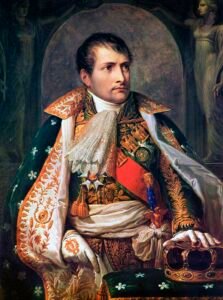
You will see many images labelled “Babur”. Treat them with care.
Smithsonian states that no portrait of Babur from his own lifetime survives. Their painting of Babur and Humayun was made around 1640. That is more than a century after Babur died.
So the faces you see online are later artists’ ideas. They are not records of how he looked.
The Baburnama
Babur wrote the story of his life and campaigns himself. The book is the Baburnama. He wrote it in Chagatai Turkish.
The surviving text covers his life from 1494 to 1529. It has gaps. The section covering May 1509 to January 1519 has not survived.
His grandson Akbar had the book translated into Persian. That translation was completed in 1589. In the 1590s, a copy with six illustrations was produced.
This is why we know so much about Babur’s own voice. A king chose to write his own record.
Timeline
- 14 February 1483: Babur is born in Andijan, in the Fergana Valley.
- 1494: His father dies. Babur takes the throne of Fergana.
- 1497: He captures Samarkand for a short time.
- 1504: He takes Kabul and makes it his new centre of power.
- 1526: He defeats Ibrahim Lodi at Panipat. This lays the foundation of the Mughal dynasty in India.
- 16 March 1527: He defeats Rana Sanga’s forces at Khanwa.
- 26 December 1530: He dies in Agra. His son Humayun succeeds him.
- Around 1544: His remains are moved from Agra to his garden in Kabul.
- 1589: The Persian translation of the Baburnama, ordered by Akbar, is completed.
- 1858: The Mughal dynasty ends, according to the Met’s dating.
Details you won’t find in guidebooks
He invented a writing system. In 1504, Babur developed a new script called khatt-i Baburi. It was made of letters without dots. Not many rulers design an alphabet in the same year they take a capital.
Think of a personal shorthand you scribble in a notebook. Babur made one for a whole writing system.
He asked his grandmother for advice. In October 1494 a rebel named Hasan Yaqub threatened the young king. Babur chose his route against him after consulting his grandmother, Esen Dawlat Begum. At eleven, he leaned on family.
His portraits are not from his time. As noted above, nothing from his lifetime shows his face. The Smithsonian painting dates to about 1640.
The book was translated for his grandson’s court. Akbar commissioned the Persian version. It was finished in 1589. A copy with six illustrations followed in the 1590s.
He built gardens himself. In Kabul he personally directed the design and construction of at least 10 gardens. He was a hands-on builder, not only a conqueror.
FAQ
What was Babur’s full name?
His full name was Zahiruddin Muhammad Babur. The name Babur is usually linked to a Persian word meaning tiger or panther.
Where was Babur from?
He was born on 14 February 1483 in Andijan, in the Fergana Valley. The city lies within the borders of today’s Uzbekistan. He was a Chagatai Turkic ruler.
Who was Babur’s father?
His father was Umar Shaykh Mirza II, the ruler of Fergana. His mother was Qutlugh Nigar Khanum.
Who ruled after Babur?
His son Humayun took the throne after Babur died in Agra on 26 December 1530.
Where is Babur’s tomb?
It is in the Bagh-e Babur gardens in Kabul. His widow had his remains moved there from Agra around 1544. The grave is a simple one, left open to the sky as he wished.
Sources
- Vikipedi — Babür tr.wikipedia.org
- Wikipedia — Babur en.wikipedia.org
- TDV İslâm Ansiklopedisi — Bâbür islamansiklopedisi.org.tr
- TDV İslâm Ansiklopedisi — Bâbürnâme islamansiklopedisi.org.tr
- UCLA MANAS — Babur southasia.ucla.edu
- The Metropolitan Museum of Art — Art of the Islamic World, Mughal India: Introduction metmuseum.org
- Smithsonian National Museum of Asian Art — Discovering Babur asia.si.edu
- Smithsonian National Museum of Asian Art — Writing My Truth: The Mughal Emperor Babur asia.si.edu
- Smithsonian National Museum of Asian Art — V. A Passage to Kabul asia.si.edu
- UNESCO World Heritage Centre — Bagh-e Babur whc.unesco.org
Image: Humayun and Babur (Late Shah Jahan Album) Babur detail.jpg — c.1650, Public domain