Kahramanmaraş carries more names than most cities have centuries to show for them. Assyrian scribes wrote one version. Roman officials used another. Medieval Muslim and Byzantine rulers each had their own. The modern name is only about fifty years old. This guide follows the city from its caves to its bazaar and explains how each name came about.
Early settlement: the caves of Tekir Valley
People lived here long before any name was written down. Finds from the Döngel caves in Tekir Valley show that settlement in the Kahramanmaraş region reaches back to the Upper Paleolithic. It continued through the Neolithic and the Early Bronze Age.
So the story starts with cave dwellers, not with a king or an empire.
Markasi: the origin of the name Maraş
The first name we can read comes from Assyrian inscriptions. They mention the place as Markasi or Markas. At that time it was the capital of Gurgum, one of the Late Hittite kingdoms.
In 711 BC the Assyrians annexed the Kingdom of Gurgum. They made Markas the center of a province. A royal capital had become a provincial seat.
This is also the best-supported answer to the question of where “Maraş” comes from. The TDV Encyclopaedia of Islam traces the name of Maraş to Markasi in Assyrian sources.
You may come across a more colorful explanation. It says Maraş means “place of shivering,” because malaria caused people to tremble. The same encyclopedia calls this claim unsupported by scholarship and points to the Markasi connection instead. If a local guide or a website repeats the shivering story, you now know how to answer.
Germanicia: the Roman name
In the Roman period the city was named Germanicia. The name honors Emperor Gaius Caesar Germanicus, who is better known as Caligula.
The city’s Roman-era remains are still being studied. Mosaics excavated at Germanicia date to the 4th and 5th centuries AD. The site also yielded archaeological data reaching back to the 2nd century AD. Together, these show a settled and decorated city over several hundred years.
Mar‘aş and Marassion
The name changed with whoever held the city. Under Islamic rule it was Mar‘aş. In a period when it returned to Byzantine rule, it was called Marassion.
Notice how these two later names echo the older Markasi. The sound survived while the rulers changed.
1114 and the move to a new site
A major earthquake in 1114 left Maraş in ruins. The city was later moved to the area it occupies today. It grew there under the Dulkadirids.
This matters for visitors. The Ottoman-era and Dulkadirid buildings you see stand on the city’s present site.
The Dulkadirid and Ottoman centuries
The Dulkadirids left some of the city’s best-known buildings.
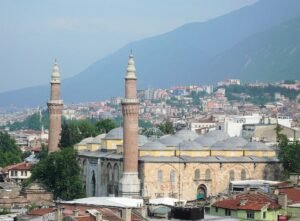
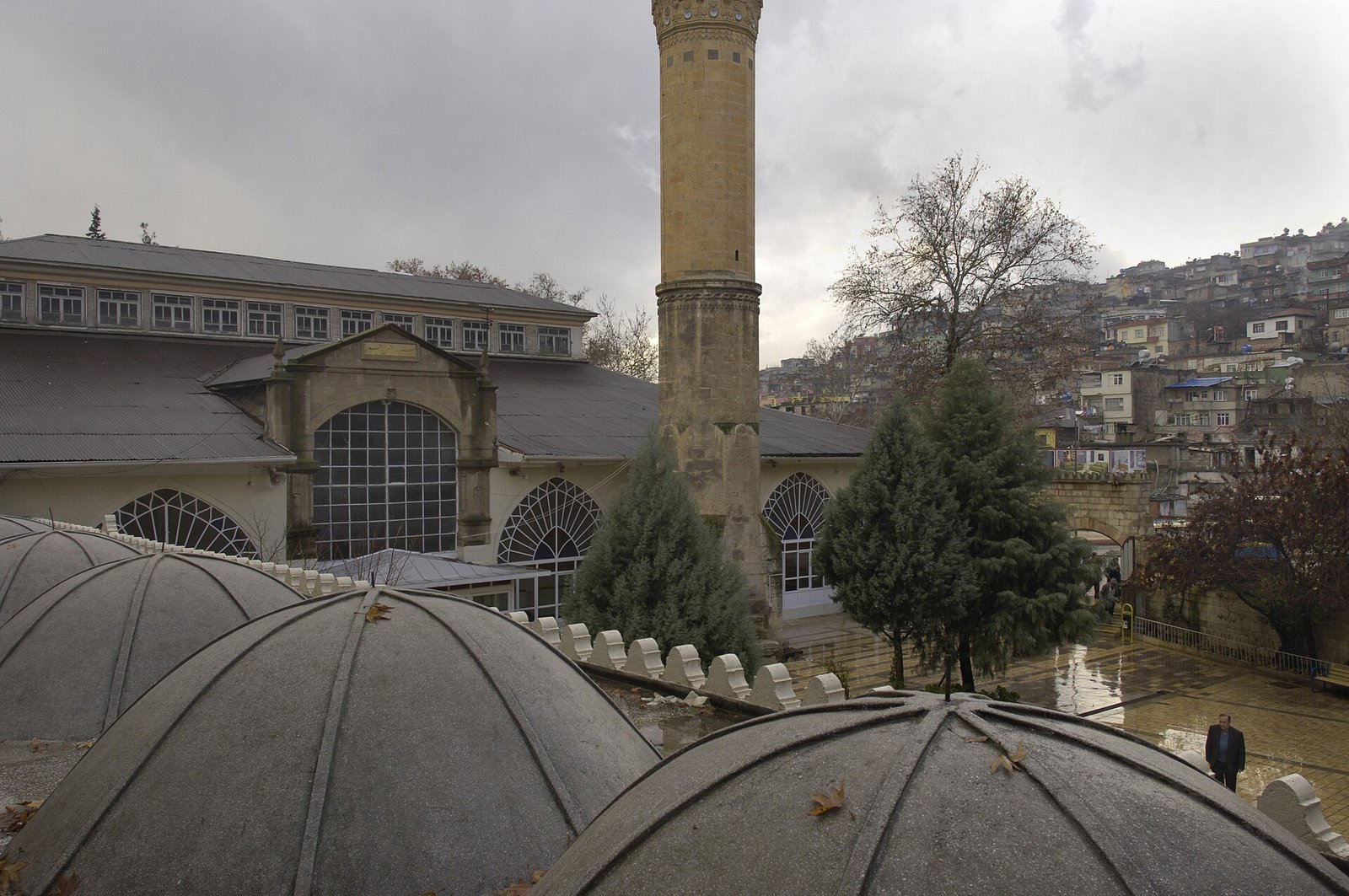
- Ulu Cami (Great Mosque): According to the foundation deeds, Dulkadirli Süleyman Bey had it built between 1442 and 1454. His son Alaüddevle Bey carried out a comprehensive repair in 1501.
- Hatuniye Camii: Alaüddevle Bey built it in 1510 in the Kurtuluş neighborhood. It carries the name of his wife, Şems Hatun.
Ottoman control became direct after Şehsuvaroğlu Ali Bey was executed in 1522. According to the TDV Encyclopaedia of Islam, Maraş was taken under direct Ottoman administration after that.
Later building continued. Around 1650, Mehmet Efendi, Kalender Çelebi and Ahmet Çelebi had the Taş Han built. In 1904, Maraş Mutasarrıf Mahmut Arif-i Paşa built the mansion that bears his name. In the Republican period it also served as the governorate building.
Occupation and resistance, 1919–1920
The modern title comes from the years after the First World War. The British occupied Maraş on 22 February 1919. On 29 October 1919, the city passed to French administration.
The people of Maraş resisted. Following that resistance, French forces began leaving the city on 11 February 1920. They withdrew toward İslâhiye.
The Grand National Assembly recognized this resistance. On 5 April 1925 it awarded Maraş the Medal of Independence.
How Maraş became Kahramanmaraş
The medal was not the last honor. Law no. 1657, dated 7 February 1973, gave Maraş the title “Kahraman,” meaning “hero.” The city’s name changed to Kahramanmaraş.
The new name therefore joins two layers. “Maraş” is the ancient name, which goes back to Markasi. “Kahraman” is the 20th-century honor for the resistance of 1919–1920.
There is an everyday link. When you write “Kahramanmaraş” on a bus ticket, a hotel form or an address, you are writing a name that combines an Assyrian-era word with a title from a 1973 law.
What to see: three eras in one city
If you visit, you can match the history above to real places.
Germanicia mosaics. The mosaic area in Bağlarbaşı opened to visitors as an archaeological site in 2018. The mosaics date to the 4th–5th centuries AD.
Ulu Cami and Hatuniye Camii. These show Dulkadirid patronage in the 15th and early 16th centuries.
The Covered Bazaar. The Maraş Kapalı Çarşısı runs north to south between the bedesten and the Bakırcılar (Coppersmiths) Bazaar. It has eight entrance openings, one of which belongs to the bedesten.
Çukur Hamam. It lies at the foot of Kahramanmaraş Castle and is built below ground level.
Stone Bridge. The bridge over the Ceyhan River is 158 meters long and has six pointed-arch openings.
Historic mansions. The Mahmut Arif-i Paşa Mansion dates to 1904. The Dedeoğlu Mansion, dated by its architecture to the early 1900s, is a three-story Ottoman house. It has an outer hall (sofa), pavilions and iwans.
Timeline
- Upper Paleolithic: Finds in the Döngel caves point to human settlement.
- 711 BC: Assyria annexes Gurgum and makes Markas a provincial center.
- Roman period: The city takes the name Germanicia, in honor of Caligula.
- 4th–5th centuries AD: The period of the Germanicia mosaics.
- 1114: An earthquake ruins Maraş.
- 1442–1454: Süleyman Bey has the Ulu Cami built.
- 1501: Alaüddevle Bey has the Ulu Cami extensively repaired.
- 1510: The Hatuniye Camii is built in the name of Şems Hatun.
- 1522: Maraş comes under direct Ottoman rule.
- About 1650: The Taş Han is built.
- 1904: The Mahmut Arif-i Paşa Mansion is built.
- 22 February 1919: The British occupation begins.
- 29 October 1919: French forces take over administration.
- 11 February 1920: French forces begin to withdraw from Maraş.
- 5 April 1925: The city receives the Medal of Independence.
- 7 February 1973: Maraş is renamed Kahramanmaraş.
- 2001: The first Germanicia mosaics are found in Bağlarbaşı.
- August 2007: A report of illegal digging starts new work on the Germanicia mosaics.
- 2018: The mosaic area opens to visitors.
- 6 February 2023: Two major earthquakes strike, with epicenters inside Kahramanmaraş Province.
- 25 June 2026: The municipality announces that shopkeepers are back in the restored Covered Bazaar.
Details you won’t find in guidebooks
A prayer dome inside the bazaar. In the middle of the Maraş Covered Bazaar there is a prayer dome built into the architecture of the commercial structure. A place for worship sits in the middle of the shops.
A caravanserai with two floors and two jobs. The Taş Han was designed with stables and storerooms on the lower floor. Travelers’ rooms were upstairs. Animals and goods stayed below, and people slept above.
A bathhouse with no founding inscription. Çukur Hamam has no construction inscription. It was also modified. In the hot room, the north iwan was extended and a private washing cell was added on each side. This raised the number of private washing cells to six.
A tunnel that nobody has found. A rumor says a passage connects Çukur Hamam to the castle. The Kahramanmaraş Metropolitan Municipality says no specific trace supports the story.
Mosaics found twice. The first Germanicia mosaics were found in Bağlarbaşı in 2001. The Kahramanmaraş Museum excavated them and moved them to the museum. Work on the Karamaraş mosaics in the Dulkadiroğlu district began separately in August 2007, after a report of illegal digging.
The earthquake and the bazaar today
The city’s history includes more recent disasters. The two large earthquakes of 6 February 2023 had their epicenters inside the borders of Kahramanmaraş Province.
The historic Covered Bazaar was damaged. On 25 June 2026 the municipality announced that 140 shops there had been renovated and that the shopkeepers had resumed business. Buying something there now is a small part of the city’s recovery.
FAQ
Where does the name Maraş come from?
The Encyclopaedia of Islam published by the Turkish Religious Foundation (TDV) links Maraş to Markasi, a name found in Assyrian sources. The same encyclopedia rejects the “place of shivering” explanation, which ties the name to malaria, as having no scientific basis.
Why is the city called Kahramanmaraş?
Law no. 1657, dated 7 February 1973, gave Maraş the title “Kahraman” (hero) and changed the name to Kahramanmaraş. The title recognizes the city’s resistance in the National Struggle. The Grand National Assembly had already awarded Maraş the Medal of Independence on 5 April 1925.
What was the city called in Roman times?
It was called Germanicia, in honor of Emperor Gaius Caesar Germanicus, better known as Caligula. The mosaics uncovered at the Germanicia site date to the 4th–5th centuries AD.
Can visitors see ancient Germanicia today?
Yes. The mosaic area in the Bağlarbaşı neighborhood opened to visitors as an archaeological site in 2018.
Who moved the city to its present location?
After the earthquake of 1114 damaged Maraş, the city was moved to its present settlement area. It grew there under the Dulkadirids (Dulkadıroğulları).
Sources
- Türkiye Kültür Portalı — Kahramanmaraş kulturportali.gov.tr
- Vikipedi — Kahramanmaraş tr.wikipedia.org
- TDV İslâm Ansiklopedisi — Kahramanmaraş islamansiklopedisi.org.tr
- Turkish Museums — Kahramanmaraş Germanicia Mozaikli Alan turkishmuseums.com
- DHMİ — Kahramanmaraş Şehir Tarihçesi dhmi.gov.tr
- Kahramanmaraş Valiliği — Tarihçe kahramanmaras.gov.tr
- Kahramanmaraş İl Kültür ve Turizm Müdürlüğü — Ulu Cami kahramanmaras.ktb.gov.tr
- Kahramanmaraş Valiliği — Tarihi Konaklar ve Dini Değerler kahramanmaras.gov.tr
- Kahramanmaraş İl Kültür ve Turizm Müdürlüğü — Kapalı Çarşı kahramanmaras.ktb.gov.tr
- Kahramanmaraş İl Kültür ve Turizm Müdürlüğü — Taş Han kahramanmaras.ktb.gov.tr
- Kahramanmaraş Büyükşehir Belediyesi — Tanıtım ve Tabiat Güzellikleri kahramanmaras.bel.tr
- Kahramanmaraş İl Millî Eğitim Müdürlüğü — Okul Dışı Öğrenme Ortamları kmaras.meb.gov.tr
- GoTürkiye — Kahramanmaraş: Gör kahramanmaras.goturkiye.com
- Kahramanmaraş Valiliği — Germanicia Antik Kenti kahramanmaras.gov.tr
- Kahramanmaraş İl Kültür ve Turizm Müdürlüğü — Germanicia Ziyaretçi Kabulüne Başladı kahramanmaras.ktb.gov.tr
- Wikipedia — Kahramanmaraş Province en.wikipedia.org
- Kahramanmaraş Büyükşehir Belediyesi — Asırlık Çarşıda Kepenkler Açıldı kahramanmaras.bel.tr
Image: Kahramanmaraş Ulu Camii 066.jpg — Dosseman, CC BY-SA 4.0