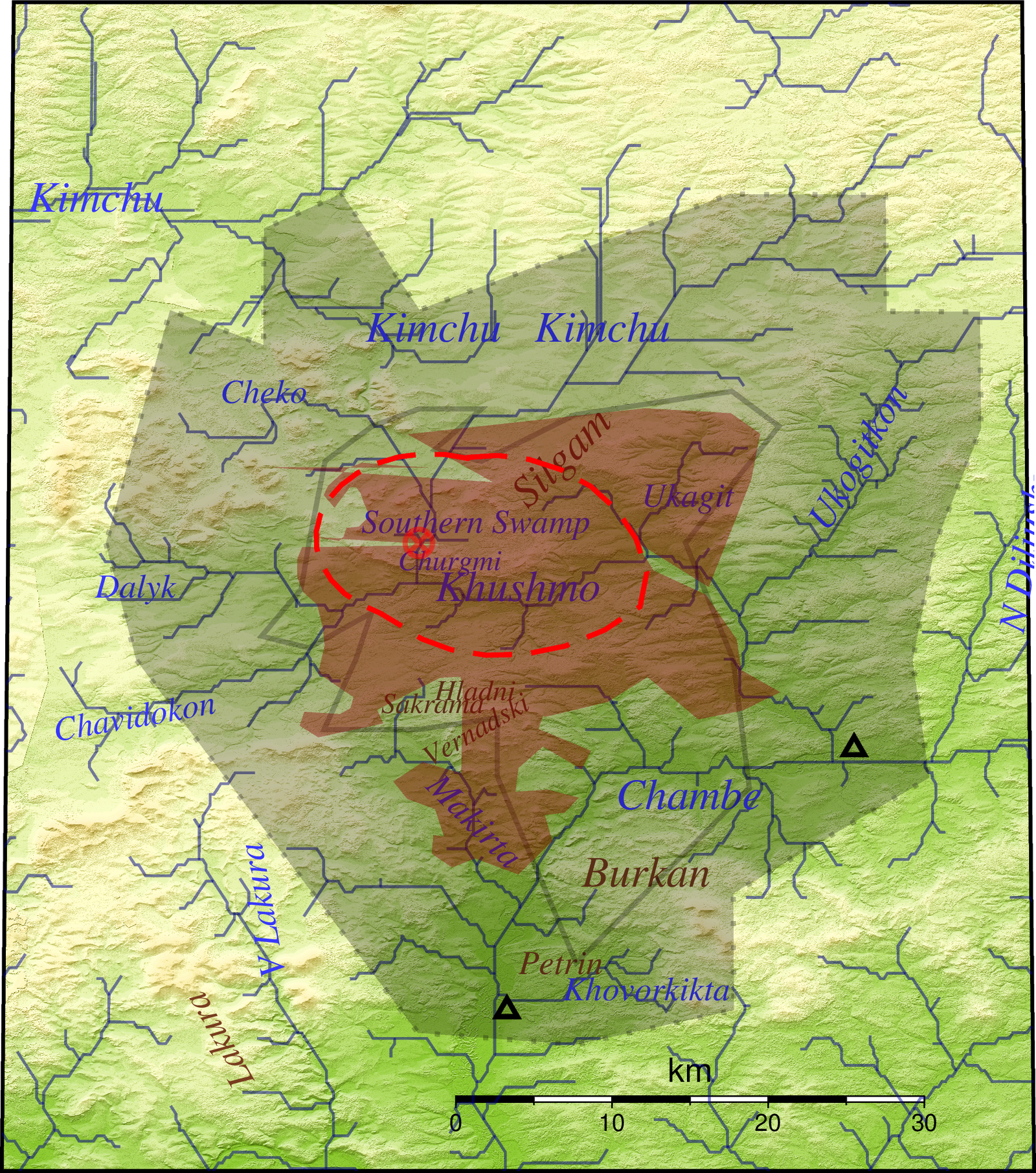
On the morning of 30 June 1908, a huge explosion in the air shook the Siberian forest near the Podkamennaya Tunguska River. Today it is called the Tunguska event. It left no obvious crater. It left a vast area of fallen trees instead.
This guide covers what happened, where it happened, what caused it, and why the famous number of 80 million trees needs a careful look.
The Tunguska Event in 1908: What Happened?
The Tunguska event was a large atmospheric explosion. It took place on the morning of 30 June 1908 near the Podkamennaya Tunguska River in Siberia.
The date can confuse you. The Russian Empire used the Julian calendar in 1908. By that calendar the date was 17 June. The Gregorian calendar, which most of the world uses, calls it 30 June.
NASA’s 2023 assessment says the most widely accepted explanation is an asteroid that broke apart in the atmosphere and exploded.
Tunguska Event Location: Where Did It Happen?
The blast area lies in the Evenkiysky region of Russia’s Krasnoyarsk Krai. The coordinates are about 60.903° north and 101.910° east.
If you search for a Tunguska event map, look for that point. It sits near the Podkamennaya Tunguska River.
Later air and ground surveys showed what the damage looked like from above. The fallen forest formed a butterfly-shaped zone of about 2,150 square kilometres. Many sources describe this shape.
The Tunguska Nature Reserve now covers the blast area. It was founded in 1995 and protects 296,562 hectares.
How Big Was the Explosion?
A NASA Ames workshop was held on 16 January 2018. Its report said the most likely Tunguska models agree on one result. The blast released energy equal to 10–20 megatons of TNT, at a height of about 10 kilometres.
The report also gave a size for the object. If it was a stony asteroid like the one at Chelyabinsk, its diameter would be about 50–80 metres.
ESA’s 2018 statement gives other numbers: a diameter of 30–40 metres and a burst height of 6–10 kilometres. The two agencies disagree because nobody recovered the object. These are model results, not measurements. Treat any single figure for the size of the Tunguska asteroid with caution.
A 2019 study in the journal Icarus shows how hard the problem is. Wheeler and Mathias tested 50 million asteroid impact scenarios to study Tunguska-like damage.
Is the 80 Million Trees Figure Real?
The number appears in headlines everywhere. The Armagh Observatory repeats it too. But it should not be read as a direct count.
A 2026 critical review by Boslough and colleagues traces it to a rough estimate. Astapovich made it in 1933. He assumed a devastated area of about 8,000 square kilometres.
That is much larger than the 2,150 square kilometres that later surveys found. So 80 million works as a rough, headline-friendly estimate. It is not an inventory of trees.
The safer statement is this: the explosion flattened forest across about 2,150 square kilometres.
Tunguska Event Crater: Why Is There No Crater?
A falling rock that hits the ground usually digs a crater. At Tunguska, Leonid Kulik reached the devastated area in 1927 and found no clear impact crater.
That is a main reason scientists think the object broke apart in the air before it reached the ground.
Kulik did find something odd near the centre. Some trees were stripped of their branches and bark, yet they still stood upright, like telegraph poles.
He also thought a hollow called the Suslov depression was a meteor crater. Then it was drained. At the bottom lay an old tree stump, which showed that reading was wrong.
The Lake Cheko Debate
Lake Cheko lies about 8 kilometres northwest of the epicentre. Some researchers think it fills a crater made by a Tunguska fragment.
In 2009, Gasperini and colleagues tried to support that idea with sediment cores. A 2008 study by Collins and colleagues had already argued the opposite. They found the crater idea very unlikely, for three reasons:
- no material from an impacting object turned up in the lake;
- the shape of the lake did not fit;
- mature trees grow on its shore.
So the origin of Lake Cheko is still debated.
Tunguska Event Deaths: Did Anyone Die?
For a long time people said nobody was killed. NASA’s 2018 report challenges that claim. It says there are fairly reliable accounts of several deaths in nomad camps about 25 kilometres from the blast centre.
Witnesses described the force far away too. Accounts compiled in the report mention:
- broken glass at 200–300 kilometres;
- burns on exposed skin up to 50 kilometres away.
Here is the everyday link. Think of a loud bang that rattles the windows of your flat. Now imagine that rattle, and broken panes, hundreds of kilometres from the source. That is the scale of this blast.
Timeline
- 30 June 1908: An atmospheric explosion occurs near Podkamennaya Tunguska.
- 1921: Leonid Kulik tries to survey the region but cannot reach the blast centre.
- 1927: Kulik reaches the blast area and studies the forest destruction.
- 1930: F. J. W. Whipple argues for a comet explanation.
- 1975: Negatives of Kulik’s team’s aerial photographs are destroyed. The prints are kept.
- 1995: The Tunguska Nature Reserve is founded.
- 2008: Collins and colleagues publish research against the Lake Cheko impact-crater theory.
- 2016: The United Nations declares 30 June International Asteroid Day.
- 16 January 2018: NASA Ames holds a workshop that reviews Tunguska with modern models.
- 2026: Boslough and colleagues publish a critical study of how the 80 million tree figure spread.
Why Did Scientists Wait 19 Years?
Kulik reached the blast area in 1927, almost 19 years after the explosion. Poor access to the region was one cause.
The First World War, the Russian Revolution and the civil war also got in the way.
In 1930 the British astronomer F. J. W. Whipple argued that the cause was a comet. Today an asteroid origin is more widely accepted.
Tunguska Event Now: What Is the Site Like Today?
The blast area is inside the Tunguska Nature Reserve. According to the reserve’s presentation, the taiga forest hit by the disaster grew back over roughly the next hundred years.
The event also left a mark on the calendar. In 2016 the United Nations chose 30 June, the anniversary of the explosion, as International Asteroid Day.
Tunguska Event Pictures: What Survives?
Kulik’s team also took aerial photographs. The negatives were destroyed in 1975. This was part of a routine clearing-out of dangerous nitrate films. The prints survived.
Details You Won’t Find in Guidebooks
- Standing poles. Near the centre, Kulik saw trees with branches and bark stripped away that still stood like telegraph poles.
- The drained hollow. When the Suslov depression was drained, an old tree stump lay on the bottom. It showed that it was not a meteor crater.
- A shirt on fire. A witness at Vanavara, about 65 kilometres from the centre, said the heat felt like his shirt was burning. He said the pressure wave threw him several metres from his chair.
- Bright nights far away. After Tunguska, unusually bright nights were reported from as far as Britain and Ireland.
- Lost negatives. The aerial negatives were destroyed in 1975 as nitrate film was purged. The prints remain.
Was It a Tesla Weapon Test?
One popular claim ties Tunguska to a weapon test by Nikola Tesla from his Wardenclyffe Tower. English Wikipedia classes this as an urban legend that contradicts the historical evidence.
Tunguska Event: Frequently Asked Questions
The FAQ section below answers the most common searches. For travellers: the blast zone is in the Evenkiysky region of Krasnoyarsk Krai, inside a nature reserve.
FAQ
Where did the Tunguska event happen?
It happened near the Podkamennaya Tunguska River in Siberia. Today the blast zone lies in the Evenkiysky region of Russia’s Krasnoyarsk Krai, at about 60.903° N and 101.910° E.
Is there a Tunguska crater?
No clear impact crater was found in the devastated area Leonid Kulik reached in 1927. That absence is one of the main reasons scientists think the object broke apart in the atmosphere before it hit the ground.
Did anyone die in the Tunguska event?
NASA’s 2018 report says there are fairly reliable accounts of several deaths in nomad camps about 25 kilometres from the blast centre. That counts against the claim that nobody died.
How big was the Tunguska object?
Nobody has measured it. NASA’s 2018 report calculated about 50–80 metres if it was a stony asteroid like the Chelyabinsk one. ESA gives 30–40 metres. Treat both as model estimates.
Sources
- Turkish Wikipedia, Tunguska Olayı tr.wikipedia.org
- English Wikipedia, Tunguska event en.wikipedia.org
- NASA, 115 Years Ago: The Tunguska Asteroid Impact Event nasa.gov
- NASA, Tunguska Workshop, 2018 ntrs.nasa.gov
- Armagh Observatory and Planetarium, Tunguska Event armagh.space
- Boslough and others, Meteoritics & Planetary Science, 2026 onlinelibrary.wiley.com
- ESA, Tunguska devastation esa.int
- Wheeler and Mathias, Icarus, Probabilistic assessment of Tunguska-scale asteroid impacts sciencedirect.com
- Gasperini and others, Terra Nova, Sediments from Lake Cheko onlinelibrary.wiley.com
- Collins and others, Terra Nova, Evidence that Lake Cheko is not an impact crater onlinelibrary.wiley.com
- English Wikipedia, Tunguska Nature Reserve en.wikipedia.org
Image: Tunguska event effect areas 3.png — own work and chatGPT 4o and 3 AI, Public domain