Topkapı Palace in Istanbul: what it is
Topkapı Palace stands in Istanbul’s Fatih district, on the headland called Sarayburnu. For centuries it was the home of Ottoman rulers and the centre of government. It was a residence, an office and a ceremonial stage at the same time.
Today it is a museum. You walk through gates, courtyards, the Harem, a relic chamber and a treasury. Each part belonged to a different side of palace life.
A short history
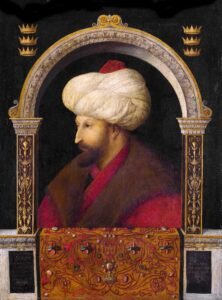
The Ministry’s National Palaces authority dates the first building phase of the palace to 1460–1478. It was commissioned by Mehmed the Conqueror (Fatih Sultan Mehmed). The palace then remained the residence and administrative centre of Ottoman rulers until the court moved to Dolmabahçe Palace in the middle of the 19th century.
That gives the palace roughly four centuries as the seat of the dynasty. On 3 April 1924 it was turned into a museum.
In 1985 UNESCO added the Historic Areas of Istanbul to the World Heritage List. Topkapı Palace lies within that listed area.
Timeline
- 1460–1478: The first building phase takes place under Mehmed the Conqueror, according to National Palaces.
- 1517: After the Egyptian campaign, Sultan Selim I sends sacred relics to Istanbul by sea.
- 1587: Murad III has the Chamber with the Wheels (Dolaplı Kubbe) built at the Harem entrance.
- 1747: Mahmud I commissions the Topkapı Dagger as a gift for Nadir Shah of Iran.
- Mid-19th century: The dynasty’s residence and government move to Dolmabahçe Palace.
- 1916: Fahreddin Pasha sends 30 relics from Medina to Istanbul.
- 3 April 1924: The palace becomes a museum.
- 1985: The Historic Areas of Istanbul enter the UNESCO World Heritage List.
- 18 August 2020: Dragon and simurgh figures found under plaster during restoration are examined on site by Aziz Doğanay.
- Summer 2026: Saturday night visits run through 13 September, with the Harem on the route.
Topkapı Palace map and location
The address is Cankurtaran Mahallesi, Babı Hümayun Caddesi No:1, Fatih, Istanbul. The map coordinates are about 41.01306° north and 28.98389° east. Type those numbers into any map app and you land at the palace.
The route inside follows the old order of the palace. The Imperial Gate (Bâb-ı Hümâyun), the Gate of Salutation (Bâbüsselâm) and the Gate of Felicity (Bâbüssaâde) lead you toward the palace’s four main courtyards. The later you go, the more private the space was.
Topkapı Palace tickets: prices, days and hours
Prices below come from the National Palaces tariff, checked on 24 October 2026. They can change, so confirm them before you travel.
- Combined ticket for the palace, the Harem and Hagia Irene: 500 TL for local visitors.
- The same ticket for foreign visitors: 2,750 TL.
- Discounted visitors: 250 TL.
The same official page lists Tuesday as the closed day. The ticket office opens at 09.00 and closes at 17.00.
A few rules matter in practice. The MüzeKart is not valid in the Harem or Hagia Irene sections. Tickets are valid only on the day you buy them, and each section allows one entry. Think of it like a cinema ticket: once you leave the screening, you cannot walk back in on the same stub.
For where to buy tickets, use the official National Palaces site (millisaraylar.gov.tr) or the palace ticket office. Plan your day around the 17.00 ticket-office closing time.
The Harem
The Imperial Harem (Harem-i Hümâyun) was the private living quarters of the dynasty. The valide sultan (the sultan’s mother), the sultan’s consorts and concubines, his children and the servants lived there. It was a household, not just a set of bedrooms.
The Carriage Gate (Arabalar Kapısı) opens from the Second Courtyard to the Chamber with the Wheels. Murad III had that chamber built in 1587. It held the Harem’s treasury and the financial records of the pious foundations (vakıflar).
Several rooms are worth looking for:
- Murad III’s Privy Chamber. This 16th-century room was designed by the architect Sinan and is decorated with İznik tiles.
- The Fruit Room of Ahmed III. The sultan’s private room is covered with painted flowers and fruit, which is why it is also called the Yemiş Odası.
- The Imperial Hall (Hünkâr Sofası). The court used it for dynastic weddings, holiday greetings and the sultan’s receptions.
The Culture and Tourism Ministry’s photo gallery for the palace includes images of the Harem and the Valide Sultan Apartments. They are a good preview if you want photos before you decide how much time to spend here.
The Holy Relics
The Chamber of the Holy Relics (Mukaddes Emanetler Dairesi) sits in the Third Courtyard, in the building that was once the Privy Chamber.
The collection grew over time. After the 1517 Egyptian campaign, Selim I had sacred relics shipped to Istanbul by sea. Some pieces came later, after his reign. These include the keys of the Kaaba, the case of the Black Stone and a gold gutter (altınoluk).
One transfer is dated precisely. In 1916 Fahreddin Pasha sent 30 relics from the Prophet’s Mosque in Medina to Istanbul. He gave them an escort of 2,000 soldiers, and they travelled by rail.
Look up as well. Restoration of the chamber’s outer arcades uncovered dragon and simurgh figures under the plaster. Aziz Doğanay examined them on site on 18 August 2020.
The Treasury
The Conqueror’s Pavilion (Fatih Köşkü) in the Third Courtyard houses the Enderun treasury. Two objects stand out.
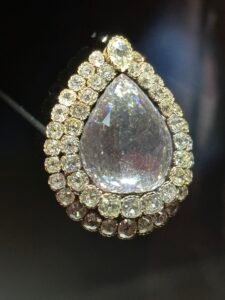
The Spoonmaker’s Diamond (Kaşıkçı Elması) weighs 86 carats and is surrounded by 49 diamonds.
The Topkapı Dagger was ordered by Mahmud I in 1747 as a gift for Nadir Shah of Iran. Nadir Shah died before it could be sent, so the dagger stayed in the palace treasury. Under the emerald lid on its hilt sits a clock made in London. It is a bit like a phone tucked inside a decorative case: a practical device hidden in a showpiece.
Details you won’t find in guidebooks
- The Chamber with the Wheels was more than a gateway. Its role was bookkeeping: it kept Harem finances and records of the foundations.
- The relics did not arrive all at once. Some came after Selim I, and the Medina group of 30 pieces came as late as 1916.
- The Medina convoy of 1916 had 2,000 soldiers as guards and travelled on the railway.
- Under the plaster of the relic chamber’s arcades, dragon and simurgh scenes survived for centuries until restoration found them.
- A clock from London sits under the emerald lid of the Topkapı Dagger.
- A tradition of treasury visits began under Abdülmecid, when the British ambassador was shown the palace treasury. Under Abdülaziz the objects were displayed in glass cases.
Night visits
A 13 June 2026 announcement set summer night visits on Saturdays from 20.30 to 22.30, through 13 September. The 2026 route included the Harem, the Chamber of the Holy Relics, the Conqueror’s Pavilion and the Treasury exhibition.
Those dates belong to one season. If you want a night visit, check the current announcement first.
How to plan your visit
Start with the gates and courtyards, since they set the order of the palace. Then decide how much time to give the Harem, the relics and the Treasury. They are separate sections, and a ticket gives one entry to each.
Buy your ticket on the day you visit. Arrive before 17.00. Remember that Tuesday is the closed day.
Sources
- Millî Saraylar — Topkapı Sarayı millisaraylar.gov.tr
- UNESCO — Historic Areas of Istanbul whc.unesco.org
- English Wikipedia — Topkapı Palace en.wikipedia.org
- Büyük İstanbul Tarihi — İstanbul’daki Mukaddes Emanetler istanbultarihi.ist
- Aziz Doğanay — Yüzyıllar Sonra Topkapı Sarayı’nda Ortaya Çıkarılan Ejder-Sîmurg Karşılaşması Üzerine dergipark.org.tr
- TRT Haber — Kaşıkçı Elması yeniden ziyarete açıldı trthaber.com
- Türkçe Vikipedi — Topkapı Sarayı tr.wikipedia.org
- Millî Saraylar — Biletle İlgili Usul ve Esaslar panel.millisaraylar.gov.tr
- TRT Haber / Anadolu Ajansı — Topkapı Sarayı’nda gece ziyaretleri yeni bölümlerle başlıyor trthaber.com
- Kültür ve Turizm Bakanlığı — Topkapı Sarayı fotoğraf galerisi ktb.gov.tr
Image: Topkapı – 01.jpg — Carlos Delgado, CC BY-SA 3.0