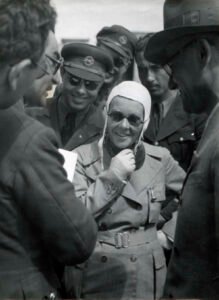
Atatürk’s reforms in Turkey: the short version
Atatürk’s reforms were political, legal, cultural, social and economic measures. They were led by Mustafa Kemal Atatürk. Their aim was to turn the Republic of Türkiye into a secular, modern nation state.
This article follows four of them: dress, the calendar and the clock, the alphabet, and surnames. Turkish sources sort them differently. The alphabet change counts as an education and culture reform. The hat revolution and the Surname Law count as social reforms.
The reforms did not start in a vacuum. Political steps came first. The sultanate was abolished on 1 November 1922. The Republic was proclaimed on 29 October 1923. The caliphate was abolished on 3 March 1924.
Kemal Atatürk’s reforms: the order of events
The most useful way to read them is by date. The steps below fall between 1922 and 1937.
Timeline
- 1 November 1922: The sultanate was abolished.
- 29 October 1923: The Republic was proclaimed.
- 3 March 1924: The caliphate was abolished.
- 27 August 1925: Mustafa Kemal addressed the public in a hat at the İnebolu Türk Ocağı.
- 25 November 1925: Law no. 671, the Hat Law, was adopted.
- 26 December 1925: The clock law (no. 697) and the calendar law (no. 698) were adopted.
- 1 January 1926: The Gregorian year numbering set by the calendar law came into use.
- 20 May 1928: Law no. 1288 on international numerals was adopted.
- 9 August 1928: The move to new Turkish letters was announced at Sarayburnu.
- 1 November 1928: The Letter Law (no. 1353) was adopted.
- 3 November 1928: The Letter Law was published in the Official Gazette.
- 1 December 1928: New letters became compulsory in Turkish newspapers, magazines, signs and notices.
- 1 January 1929: New letters became compulsory in books printed in Turkish.
- 21 June 1934: The Surname Law (no. 2525) was adopted.
- 24 November 1934: Mustafa Kemal received the surname Atatürk.
- 26 November 1934: The law abolishing social titles was adopted.
- 3 December 1934: The clothing law no. 2596 was adopted.
- 5 February 1937: Secularism entered the Constitution.
Atatürk’s clothing reforms: the Hat Law
The clothing story begins in the Black Sea region. On 27 August 1925, Mustafa Kemal arrived at the İnebolu Türk Ocağı wearing a hat. He was on a trip to Kastamonu. There he explained the change of dress to the public.
The legal step followed quickly. On 16 October 1925, Konya deputy Refik Koraltan and his colleagues submitted a bill on wearing hats to the Grand National Assembly (TBMM). The Assembly adopted Law no. 671, “On the Wearing of Hats”, on 25 November 1925.
The law did two things. It obliged deputies and public officials to wear a hat. It also defined the hat as the general headwear of the people.
Details you won’t find in guidebooks
- A loan for hats. The government decided to lend 50 lira to officials who struggled to afford new clothes and a hat. The money was to be deducted from their salaries over one year.
- The calendar had a bridge day. Law no. 698 fixed the day after 31 Kânunuevvel 1341 in the old Rumi calendar as 1 Kânunusani 1926 in the Gregorian calendar.
- The Islamic lunar calendar was kept. Article 3 of the calendar law preserved the hijri lunar calendar for special uses. The observatory was to officially determine the start of each month.
- Old letters had a grace period for shorthand. The Letter Law allowed the old Arabic letters to be used for shorthand in official and private records until 1 June 1930.
- Old documents stayed valid. Article 7 of the Letter Law kept old written money, stamps, bonds and legal documents valid as long as they were not changed.
Atatürk’s religious and secular reforms
The question “what were the secular reforms?” usually points to a chain of steps. The sultanate fell in 1922. The caliphate fell in 1924. Secularism entered the Constitution on 5 February 1937.
Dress is a common source of confusion here. The 1925 Hat Law is separate from Law no. 2596 of 3 December 1934. That later law limited the wearing of religious dress by clergy outside places of worship. Do not merge the two when you read about them.
One more social change belongs in this group. The law of 26 November 1934 abolished social titles such as ağa, efendi, bey and paşa.
Atatürk’s language and alphabet reforms
The alphabet change was announced in public first. On 9 August 1928, Mustafa Kemal told the public at Sarayburnu in Istanbul that Turkey would move to new Turkish letters.
The law followed within three months. Law no. 1353, “On the Adoption and Application of Turkish Letters”, was adopted on 1 November 1928. It replaced the Arabic letters used for writing Turkish with Latin-based Turkish letters. It appeared in Official Gazette no. 1030 on 3 November 1928.
The law set deadlines:
- From 1 December 1928, newspapers, magazines, signs and notices in Turkish had to use the new letters.
- From 1 January 1929, books printed in Turkish had to use them too (Article 5).
- Shorthand in the old letters was allowed until 1 June 1930.
Numbers changed too. Law no. 1288 adopted international numerals. It was passed on 20 May 1928 and took effect on 1 June 1928.
Here is an everyday link. When you read a price tag or a bus number in Turkey today, the digits you see are the international ones this 1928 law introduced.
Calendar and clock reforms
The Assembly passed two laws on 26 December 1925. Law no. 698 changed the starting point of the calendar. Under it, Gregorian year numbering began on 1 January 1926.
Law no. 697 dealt with the hours of the day. It started the day at midnight and counted hours from zero to twenty-four.
The same law fixed a reference line. The 30th degree east meridian, measured from Greenwich, passes near İzmit. It became the basis of Turkey’s clock times.
So when you check a timetable in Turkey, you are reading time under a 1925 rule. The day starts at midnight, and the hours run from zero to twenty-four.
The Surname Law
Before 1934, a surname was not a legal requirement. The 15-article Surname Law (no. 2525) was adopted on 21 June 1934. It required every Turkish citizen to carry a surname in addition to their given name.
The law also set limits on the names people could pick. It banned rank and office names, names of foreign races and nations, and words that were immoral or ridiculous.
The Assembly gave Mustafa Kemal his own surname on 24 November 1934. That surname was Atatürk. Two days later, on 26 November 1934, a law abolished titles such as ağa, efendi, bey and paşa.
Atatürk’s economic reforms
Economic measures belong to the wider set of reforms. This article covers four laws in detail: the hat law, the calendar and clock laws, the Letter Law and the Surname Law. Economic reforms are a separate subject.
FAQ
What were Atatürk’s reforms?
They were political, legal, cultural, social and economic measures led by Mustafa Kemal Atatürk. Their aim was to turn the Republic of Türkiye into a secular, modern nation state.
When did Turkey switch to the Latin-based alphabet?
Law no. 1353 was adopted on 1 November 1928 and published in the Official Gazette on 3 November 1928. New letters became compulsory in newspapers, magazines, signs and notices on 1 December 1928, and in printed Turkish books on 1 January 1929.
Did the Hat Law ban religious clothing?
No. The 1925 Hat Law (no. 671) required deputies and public officials to wear hats and defined the hat as the general headwear of the people. A separate law, no. 2596 of 3 December 1934, limited the wearing of religious dress by clergy outside places of worship.
When did Turkey adopt the surname system?
The 15-article Surname Law (no. 2525) was adopted on 21 June 1934. It required every Turkish citizen to carry a surname in addition to their given name.
Sources
- Wikipedia — Atatürk’s reforms en.wikipedia.org
- Vikipedi — Atatürk Devrimleri tr.wikipedia.org
- Atatürk Ansiklopedisi — Atatürk Devrimleri (Utkan Kocatürk) ataturkansiklopedisi.gov.tr
- Millî Eğitim Bakanlığı — Kronoloji meb.gov.tr
- Atatürk Ansiklopedisi — Şapka İnkılabı ataturkansiklopedisi.gov.tr
- Atatürk Araştırma Merkezi — Türkiye Cumhuriyeti Tarihi II atam.gov.tr
- Atatürk Ansiklopedisi — Takvim, Saat ve Ölçü Sistemlerinin Değiştirilmesi (Cemal Avcı) ataturkansiklopedisi.gov.tr
- Atatürk Ansiklopedisi — Uluslararası Sayıların Kabulü ataturkansiklopedisi.gov.tr
- Millî Savunma Bakanlığı — Atatürk İnkılapları ata.msb.gov.tr
- Millî Eğitim Bakanlığı — Harf İnkılâbı meb.gov.tr
- LEXPERA — 1353 sayılı Kanun metni lexpera.com.tr
- Atatürk Ansiklopedisi — Soyadı Kanunu (Oğuz Aytepe) ataturkansiklopedisi.gov.tr
- Çankırı Valiliği — Atatürk’ün Devrimleri cankiri.gov.tr
- Büyükçekmece Belediyesi — Atatürk Devrimleri Müzesi ataturkmuzesi.bcekmece.bel.tr
Image: Mustafa Kemal harf devriminde.jpg — Presidency of the Republic of Turkey, Public domain