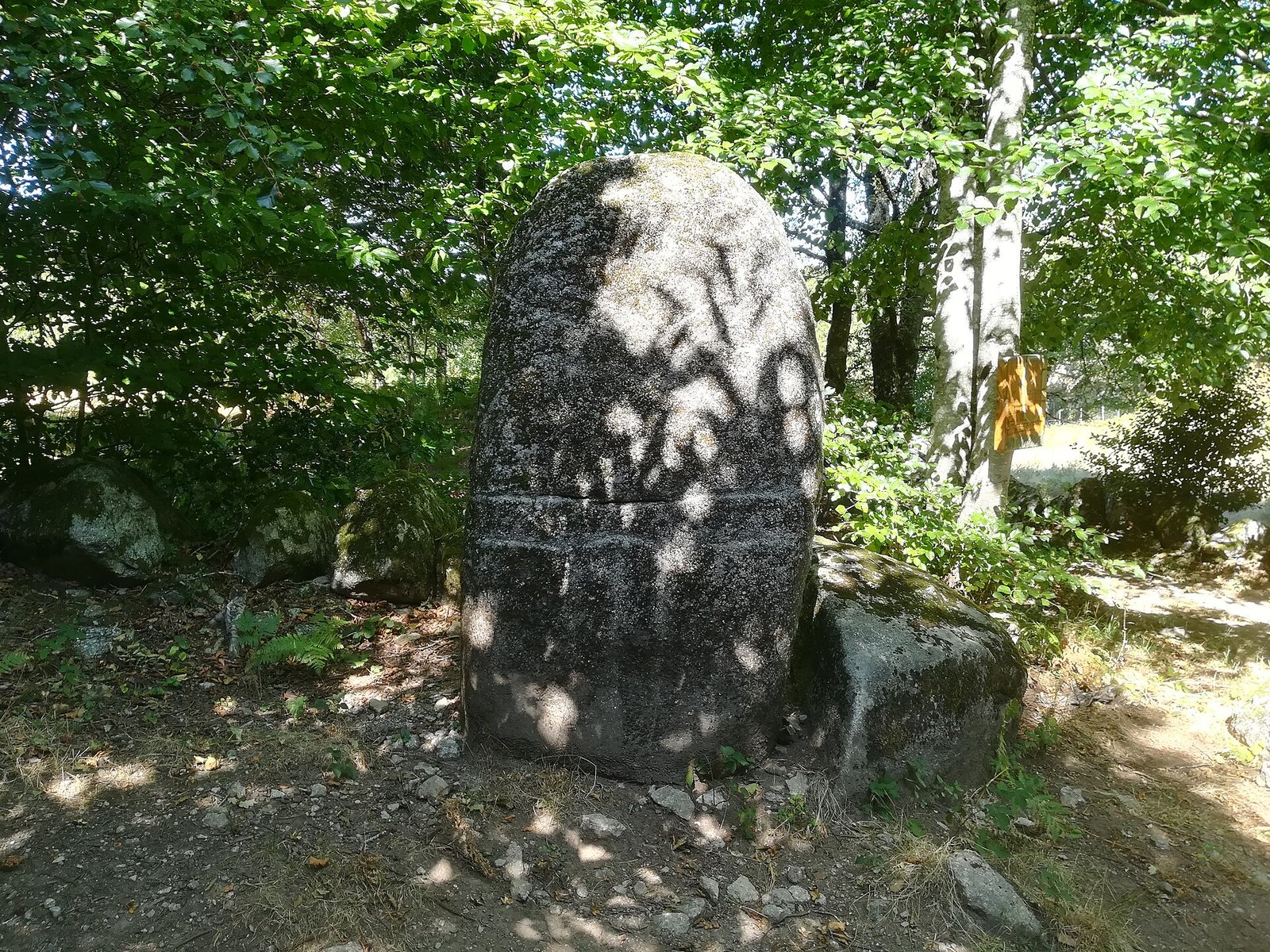
The 10-tonne stone figure found near Paris reveals a human-shaped monument within Champigny’s Neolithic cemetery, which contains 11 graves and a total of 30 megalithic blocks, including the figure itself. Dated by ArtsLife to 4750–4300 BCE, the cemetery combines burials with structures of wood, earth and stone. The figure’s carved belt provides a clear detail of its human representation.
Why place such a massive human image among graves? At Champigny-sur-Marne, the answer begins with the arrangement of the cemetery, the stone’s worked surface and the smaller features around it. If you look beyond its headline weight, you encounter a seated burial, a raised area without a burial and a building mixture that hardened as it dried.
Where was the stone figure found near Paris?
The cemetery lies in Champigny-sur-Marne, in France’s Val-de-Marne department. The town is approximately 12.5 kilometres east-southeast of central Paris. The discovery therefore belongs to a specific place beyond the city centre, rather than to an excavation within central Paris itself.
Archaeologists found the cemetery at 134–148 rue de Verdun during a rescue excavation before housing construction. An Inrap team led by Romana Blaser carried out the work under the supervision of the Île-de-France DRAC. The modern construction project brought the ancient burial ground into view.
The excavation exposed more than the enormous carved stone. Ouest-France’s inventory, attributed to Inrap, includes 30 megalithic blocks in total, counting the statue-menhir itself. Wooden, earthen and stone structures also formed part of the site. These materials give the cemetery a broader architectural setting.
What is a statue-menhir?
A statue-menhir is a prehistoric monument made from an upright stone slab or pillar bearing a stylised human figure. At Champigny, a carved belt is one of the identifiable human details. That feature matters because the discovery is more than a large stone associated with graves: its surface carries a human representation.
Statue-menhirs occur in southern and western France, Catalonia, Corsica, Sardinia, Italy and the Alps. Champigny’s stone can therefore be considered within a wider category of prehistoric human-shaped monuments. That shared category does not establish that every figure represented the same kind of person or carried the same meaning.
For the statue-menhirs of Rouergue, the Fenaille Museum lists interpretations including gods, heroes and prominent people. It also explains that the available evidence does not distinguish between those possibilities. These are interpretations concerning Rouergue, rather than an identification of the Champigny figure.
How big is Champigny’s 10-tonne stone figure?
The estimated weight is 9.7 tonnes. The familiar 10-tonne description rounds that estimate. The stone measures 3.04 metres long, 1.68 metres wide and 74 centimetres thick.
A comparison with the Fenaille Museum in Rodez makes the scale easier to grasp. Its complete statue-menhirs weigh between 90 and 870 kilograms and stand between 0.85 and 2.10 metres high. Champigny’s estimated weight exceeds that collection’s stated range by a considerable margin.
The comparison has a clear boundary: the Fenaille figures describe one museum’s complete statue-menhirs. They provide a useful reference for size, without establishing a ranking for every such monument. You can appreciate Champigny’s dimensions through this comparison while keeping the evidence tied to the objects actually described.
What do the 11 graves reveal about the cemetery?
The graves form two concentrations. Eight occupied a southern area measuring 60 square metres. Three lay around the statue-menhir. This distribution places the human-shaped stone within the cemetery’s burial arrangement and gives the discovery a spatial context beyond the monument alone.
The distinction between the southern group and the three graves around the stone is useful when you picture the site. All 11 graves belonged to the excavated cemetery, but they were not gathered into a single cluster immediately beside the figure. Their recorded positions are part of the evidence for how the burial ground was arranged.
Stone blades, axes and weapon points were found near human remains. Their proximity connects these objects with the burial setting. The reported inventory includes both the monumental blocks and smaller worked objects, allowing the cemetery to be considered at several scales, from individual finds to large structures.
Details you won’t find in guidebooks
One adult had been buried seated in a narrow, circular pit. Calcite covered the legs and feet. This burial adds a specific bodily position and a material detail to the cemetery’s overall grave count. Eleven graves is a useful total; the seated adult shows how much detail that total can conceal.
A raised earthen area to the southeast covered approximately 30 square metres. A small broken stele was present, but no burial was found there. Its position and contents distinguish it from the groups of graves. The cemetery included a marked, raised feature as well as places containing human remains.
The builders also used a mixture of carbonate-rich sand and silt, gravel and water. It hardened when dry. For an everyday-life link, think of mixing a paste and watching it set: the useful comparison is the change from a workable wet mixture to a hardened material. At Champigny, that process formed part of construction within the cemetery.
The statue-menhir’s surface combines natural hollows with small human-made cup-shaped depressions. This distinction matters when looking at its texture. Some recesses belonged to the stone’s natural surface; others resulted from deliberate work. Alongside the carved belt, these depressions add another layer to its physical description.
Was the figure painted, and why was it lying down?
White and black marks on the stone’s upper-left area have been linked to possible paint. That interpretation requires analytical confirmation that the marks are pigments. The marks are a recorded feature; their identification as paint remains a proposition to be tested.
Archaeologists found the statue-menhir lying horizontally in its setting pit. It is interpreted as having been toppled and abandoned. The horizontal position is the physical observation behind that interpretation. It should not be turned into a detailed account of a deliberate ceremony or a particular act of destruction.
The carved belt, surface depressions, coloured marks and horizontal position belong to different aspects of the stone’s history. The belt concerns the human image. The depressions concern its surface treatment. The marks raise the possibility of colour, while its position informs the interpretation of its abandonment.
Timeline
- 4750–4300 BCE: ArtsLife’s date range for Champigny’s Middle Neolithic cemetery.
- 5 December 2025: The French Ministry of Culture’s Créteil meeting programme listed Romana Blaser’s presentation of preliminary results from Champigny.
- 2 November 2026: Inrap announced the discoveries, according to Ouest-France.
The December 2025 programme places Champigny’s preliminary results before the November 2026 public announcement. These dates describe different stages of archaeological communication. The cemetery’s prehistoric date range, meanwhile, concerns the ancient site itself.
FAQ
What does the 10-tonne stone figure near Paris reveal?
It reveals a human-shaped monument within a Neolithic cemetery containing 11 graves, 30 megalithic blocks and structures made from wood, earth and stone. A carved belt is among the stone’s identifiable human details.
How old is Champigny’s Neolithic cemetery?
ArtsLife dates the cemetery to 4750–4300 BCE, within the Middle Neolithic.
Does the Champigny stone weigh exactly 10 tonnes?
Its estimated weight is 9.7 tonnes. The 10-tonne figure used in headlines is rounded.
Was paint found on the stone?
White and black marks on its upper-left area have been interpreted as possible paint. Analysis is needed to confirm whether they are pigments.
Sources
- ArtsLife — Champigny-sur-Marne’s Neolithic cemetery and colossal menhir artslife.com
- Ouest-France — Eleven graves and a three-metre statue discovered in Val-de-Marne ouest-france.fr
- French Ministry of Culture — Journée Archéologique d’Île-de-France 2025 programme culture.gouv.fr
- Musée Fenaille — Les statues-menhirs musee-fenaille.rodezagglo.fr
- Wikipedia — Champigny-sur-Marne en.wikipedia.org
- Wikipedia — Statue menhir en.wikipedia.org
Image: Statue-menhir du Secun.jpg — Patoleon, CC BY-SA 4.0