What was feudalism? A simple definition
Feudalism was a form of social, political and economic organization in medieval Europe. Land, service and personal loyalty connected its participants. In the classic Western European model, a lord provided a vassal with a fief. The vassal owed loyalty and service in return.
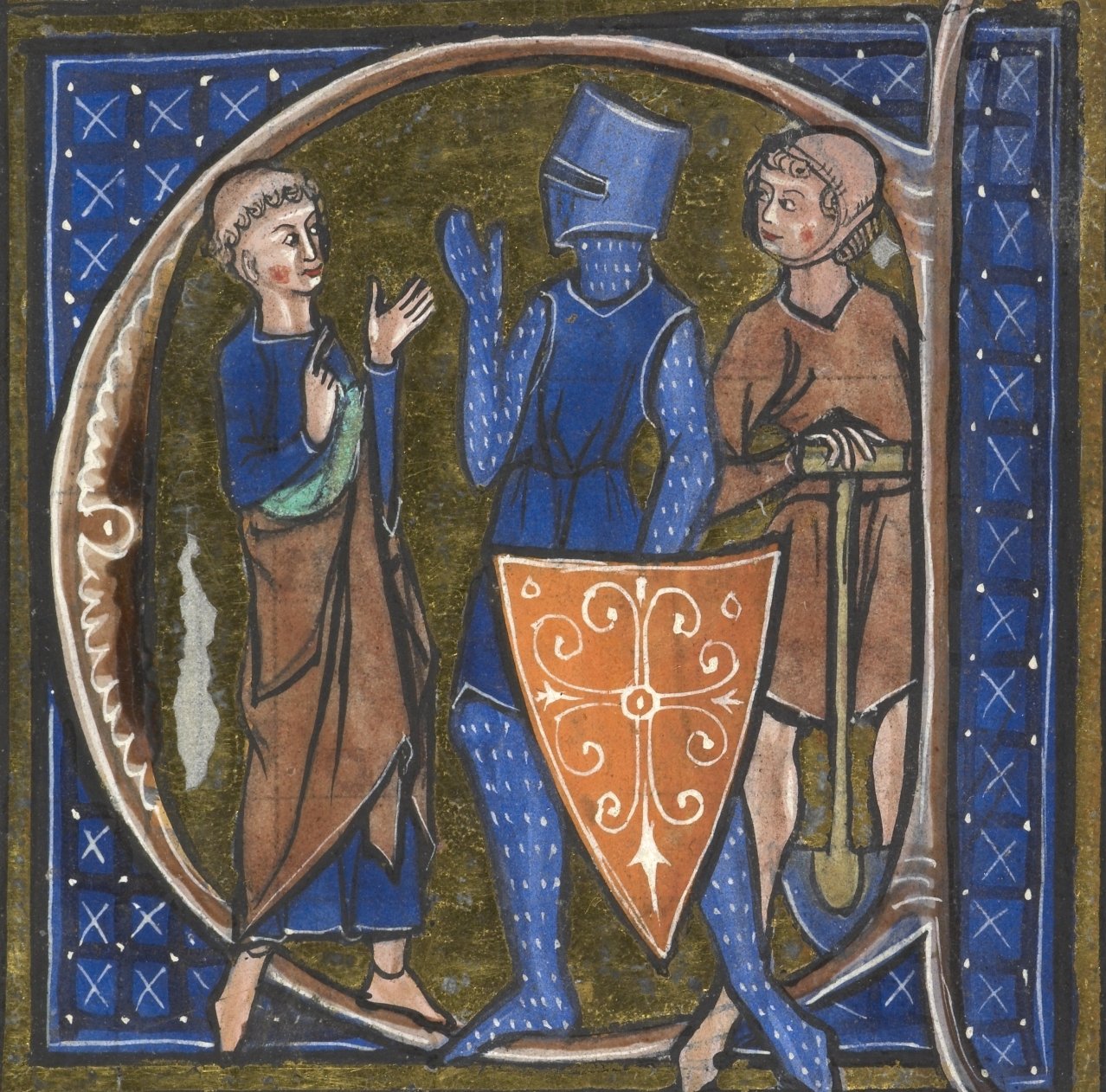
If you remember one distinction, make it this: lords, vassals and serfs held different positions. A lord could grant a fief. A vassal accepted obligations to a lord. A serf was a dependent peasant whose legal position differed from that of a vassal.
Feudal relationships became widespread between the ninth and fifteenth centuries. Those dates do not mark a shared beginning and ending for every region. Institutions developed differently across Europe, and some feudal rights survived beyond that broad medieval period.
Feudalism meaning in history: land, service and loyalty
The meaning of feudalism depends partly on how broadly the term is used. A narrow definition concentrates on relationships among warrior nobles. A broader definition includes peasants and clergy within the organization of feudal society.
For an everyday-life connection, think about a promise to provide help in return for support. That makes the exchange of obligations easier to follow. In medieval vassalage, however, the relationship involved personal loyalty and a fief. Fulbert of Chartres also described obligations that bound both sides.
For readers visiting Turkey, the Turkish term derebeylik provides a language connection. It is another name for feudalism in Turkish. The classic relationships explained here developed in medieval Europe and took different forms across its regions.
Where did feudalism start?
Feudal institutions developed in the Carolingian world during the ninth and tenth centuries. Their earlier foundations included practices in Frankish territories around the seventh century. Kings or the Church granted land in return for service.
The fragmentation of the Carolingian Empire weakened central protection. In Western Europe, this helped relationships based on local security and service spread. Powerful local figures could provide protection, while those depending on them accepted obligations.
These institutions subsequently spread in different forms to the British Isles, Spain and eastern Germany. You should therefore treat their Carolingian development as a starting point for comparison. It does not mean every region followed an identical pattern.
What did a lord do?
In the classic Western European model, a lord occupied the superior position in a relationship with a vassal. The lord provided a fief and expected loyalty and service. Land and personal obligations were therefore closely connected.
Being a lord did not necessarily mean having no superior. A noble could be the vassal of a higher lord. That same noble could also act as lord to lesser nobles. The two positions could exist within one person’s relationships.
Clergy could occupy these positions too. Bishops and abbots could act as both lords and vassals in their dealings with secular people. Feudal relationships consequently extended beyond relationships among secular nobles alone.
What was a vassal?
A vassal accepted duties of loyalty and service to a lord. Entry ceremonies in Western Europe included homage and an oath of fidelity. These acts expressed the personal allegiance at the center of the relationship.
Service also included counsel and aid. Fulbert, bishop of Chartres, listed these obligations in a letter to William, duke of Aquitaine. The Fordham collection dates the letter to 1020. It provides a concrete statement of what loyalty required.
Some vassals in medieval France declared loyalty to two or more lords. Such arrangements complicated their obligations. If you picture every noble attached to only one superior, these multiple allegiances show why that picture needs qualification.
What was a serf, and how was serfdom different?
In medieval France, a serf was a peasant in lifelong personal dependency on a lord. Serfs were legally unfree. Their status was also considered hereditary. This placed them in a different legal position from vassals.
Not every peasant in medieval France was a serf. Some held land as allodial owners, possessing it directly. Others were tenants who paid rent. Calling every medieval peasant a serf would erase these differences in landholding and status.
Legal dependency also requires careful interpretation. French serfs faced restrictions on bringing lawsuits and entering the clergy. Yet many examples show them doing both. Their legal limitations and their recorded activities did not always align neatly.
Timeline
- Around the seventh century: Kings or the Church in Frankish territories granted land in return for service.
- Ninth–tenth centuries: Feudal institutions developed in the Carolingian world.
- 1020: According to the Fordham collection’s dating, Fulbert wrote his letter explaining reciprocal obligations between lord and vassal.
- 1066: William I’s victory at Hastings established Norman rule in England.
- 1086: The Domesday survey recorded a country governed through feudal bonds.
- 1348–1349: The Black Death created a severe labor shortage in England.
- 1351: England’s Statute of Labourers sought to limit wages and control workers’ mobility.
- 1381: The Peasants’ Revolt occurred in England amid labor disputes and dissatisfaction with government.
- 4 August 1789: French decisions targeted feudal rights, while some land obligations remained redeemable through payment.
- 17 July 1793: A French decree completed the definitive abolition of feudal privileges.
- 1974–1994: Works by Elizabeth A. R. Brown and Susan Reynolds strengthened criticism of feudalism as an explanatory model.
How did feudalism change in England?
England provides a documented example of feudal relationships and their later pressures. Norman rule followed William I’s victory at Hastings in 1066. The Domesday survey of 1086 recorded a country governed through feudal bonds.
During the Middle Ages, England’s growing money economy and trade placed pressure on older feudal arrangements. The Black Death of 1348–1349 added a major disruption. Labor shortages encouraged workers to demand higher wages.
Dependent peasants also refused to provide unpaid services to their lords. The Statute of Labourers followed in 1351. It aimed to restrict wage increases after the plague and control the movement of workers.
The Peasants’ Revolt erupted in 1381. Its setting included disputes over labor after the plague and growing dissatisfaction with government. These developments connect feudal obligations to concrete struggles over work, payment and authority.
Details you won’t find in guidebooks
Fulbert’s letter did not place every obligation on the vassal. It also required reciprocal loyalty from the lord. A lord who violated that obligation could be judged faithless. Loyalty was therefore presented as a duty on both sides.
The Church’s involvement went beyond receiving land for service. Bishops and abbots could themselves be lords and vassals. Their position makes the broader definition of feudal society especially relevant when examining clergy alongside nobles and peasants.
France’s August 1789 decisions also contained an important distinction. Rights involving personal dependency were abolished without compensation. Some obligations attached to land could instead be ended through payment. The decisions therefore treated different burdens differently.
Why did feudalism decline?
Several developments weakened feudal relationships. In England, trade and the money economy pressured older arrangements. Labor shortages after the Black Death changed disputes over wages and unpaid service. Across Europe, stronger central monarchies reduced the scope for local lords’ independent military and political power.
Legal abolition followed different schedules from these economic and political changes. In France, the Constituent Assembly met at Versailles and acted against feudal rights and privileges on the night of 4 August 1789. The Convention’s decree of 17 July 1793 completed the definitive abolition of feudal privileges.
Why do historians debate the definition of feudalism?
Marc Bloch’s broad approach, published in 1939, included peasants and clergy within feudal society. François Louis Ganshof’s narrower definition of 1944 emphasized relationships among warrior nobles. The same term could therefore describe different subjects.
Elizabeth A. R. Brown’s 1974 article and Susan Reynolds’s 1994 book challenged feudalism as a common model for medieval societies. Richard Abels offered a qualification in 2009. He accepted the need for criticism but argued that historians could give too little attention to vertical allegiances and power relationships.
FAQ
What is a simple definition of feudalism?
Feudalism describes relationships organized around land, service and personal loyalty in medieval Europe. In the classic Western European model, a lord provided a fief and expected loyalty and service from a vassal.
Were vassals and serfs the same?
No. A vassal owed loyalty and service to a lord. A serf in medieval France was a legally unfree peasant whose personal dependency was lifelong and whose status was considered hereditary.
Where did feudalism start?
Feudal institutions developed in the Carolingian world during the ninth and tenth centuries. Earlier practices of granting land for service existed in Frankish territories around the seventh century.
When did feudalism end?
There was no single ending across Europe. French decisions against feudal rights began in August 1789, while the definitive abolition of feudal privileges followed through a decree dated 17 July 1793.
Sources
- Vikipedi — Feodalizm tr.wikipedia.org
- Wikipedia — Feudalism en.wikipedia.org
- Gettysburg College — Medieval Feudalism cupola.gettysburg.edu
- Bloomsbury — The Rise of Feudal Society in Medieval Europe media.bloomsbury.com
- Cornell University Press / Oxford Academic — Peasant Status and the Meanings of Serfdom academic.oup.com
- Fordham University — Fulbert of Chartres: On Feudal Obligations, 1020 sourcebooks.web.fordham.edu
- Richard Abels — The Historiography of a Construct compass.onlinelibrary.wiley.com
- English Heritage — Introduction to Medieval England english-heritage.org.uk
- Assemblée nationale — Nuit du 4 août : Abolition des privilèges assemblee-nationale.fr
Image: Cleric, Knight, and Workman representing the Three Classes.jpg — Unknown authorUnknown author., Public domain