Bilge Qaghan is one of the few early Turkic rulers whose name still reaches you through a stone monument. He ruled in the early 700s, and his inscription still stands in Mongolia. This guide covers who he was, what the inscription says and what you can still see.
Who Was Bilge Qaghan?
Bilge Qaghan was a Turkic ruler from the Ashina dynasty. He is known as the fourth ruler of the Second Turkic Khaganate (also called the Second Göktürk Khaganate).
Ahmet Taşağıl dates his birth to 683. He dates his reign to 716–734.
His father was İlteriş Kutluğ Qaghan. His mother was İlbilge Khatun. His younger brother was Kül Tigin.
Chinese records give his personal name as Ashina Mojilian. “Bilgä Qaγan” is his ruling title.
Before He Became Qaghan
Bilge did not start at the top. In 697 he was appointed shad over the Tardush people. A shad was a high commander. He served in the southwest of the Altai Mountains and around the Irtysh River.
He was also a soldier. According to Taşağıl, Bilge took part in 25 military campaigns before he became qaghan in 716.
His father-in-law was Tonyukuk, whose daughter he married. Tonyukuk served as an adviser in running the state.
How He Took the Throne in 716
Kapgan Qaghan was killed in 716. After that, Kül Tigin removed İnel Qaghan. He then put his older brother Bilge on the throne.
The younger brother cleared the way, and the older brother ruled. That detail says a lot about how the two worked together.
A Ruler Who Also Made Deals
Bilge’s reign was not only about war. İbrahim Kafesoğlu writes that diplomatic contacts in 727 led to an agreement at the city of So-fang. Turks and Chinese could trade freely in a shared market there.
Think of the weekly bazaar you may pass on a trip to Turkey. Farmers, tailors and spice sellers set up side by side because buyers come. A shared border market worked on a similar idea, with two states agreeing to let people trade in one place.
Bilge Qaghan Inscriptions: What Is Written in Stone
Kül Tigin died on 27 February 731. Bilge Qaghan had an inscription raised in his brother’s memory.
Bilge’s own inscription came later. Ankara University course material says his son Tenri Tigin had it erected in 735.
Here is how the Bilge Qaghan inscription is laid out:
- The east face has 41 lines.
- The north face has 15 lines.
- The south face has 15 lines.
- The monument carries Turkish text in Köktürk letters.
- A Chinese inscription also stands on the monument.
The line count tells you how much was carved.
The Famous Warning and the Translation Dispute
You will often see Bilge Qaghan quoted with a line like “Turkish nation, tremble and return to yourself.” Check that quote before you repeat it.
Talat Tekin reports that Thomsen translated a phrase in line 19 of the east face this way in 1924. Tekin disagrees. He reads the phrase ertin ökün in the same line as a call to give up bad habits and feel regret.
So the line is not a settled quote. Both readings treat it as a warning to the people.
In Tekin’s translation, lines 18–19 of the east face ask a pointed question. Unless the sky collapses and the earth is pierced, who could destroy the state and laws of the Turkish people?
Death and Funeral
Accounts based on Chinese sources say Bilge Qaghan was poisoned by Buyruk Chor. He died on 25 November 734.
English-language Wikipedia gives his place of death as Ötüken, in present-day Mongolia. His funeral took place on 22 June 735. That was the year after his death, and the same year the inscription was erected.
Timeline
- 683: Bilge Qaghan is born, according to Ahmet Taşağıl.
- 697: He is appointed shad over the Tardush people.
- 716: He becomes qaghan after Kül Tigin’s intervention.
- 727: Diplomatic contacts lead to a shared-market agreement with China at So-fang.
- 27 February 731: His brother Kül Tigin dies.
- 25 November 734: Bilge Qaghan dies after being poisoned.
- 22 June 735: His funeral takes place.
- 735: His inscription is erected.
- 2001: A gold crown is found at the tomb complex, and the reassembled inscription is re-erected.
- 2004: The Orkhon Valley Cultural Landscape joins the UNESCO World Heritage List.
Visiting Bilge Qaghan’s Monument Complex
The tomb complex is in Mongolia. It lies between the Orkhon River and Lake Khoshoo Tsaidam, about 50 kilometers from Karakorum.
The Kül Tigin complex is about one kilometer to the north. The brothers’ monuments are close neighbors on the ground.
The wider area is the Orkhon Valley Cultural Landscape. UNESCO added it to the World Heritage List in 2004.
If you go, don’t expect the original stones where they once stood. The Bilge Qaghan and Kül Tigin inscriptions were taken to the Göktürk Museum at Khoshoo Tsaidam for protection. Copies were placed in their original spots.
Details You Won’t Find in Guidebooks
- The size of the complex. Bilge Qaghan’s complex covers an area of 72 × 36 meters, laid out east to west.
- A bird on the crown. The gold crown found in the 2001 excavations is attributed to Bilge Qaghan. It carries a bird motif, with the bird holding a precious stone in its beak.
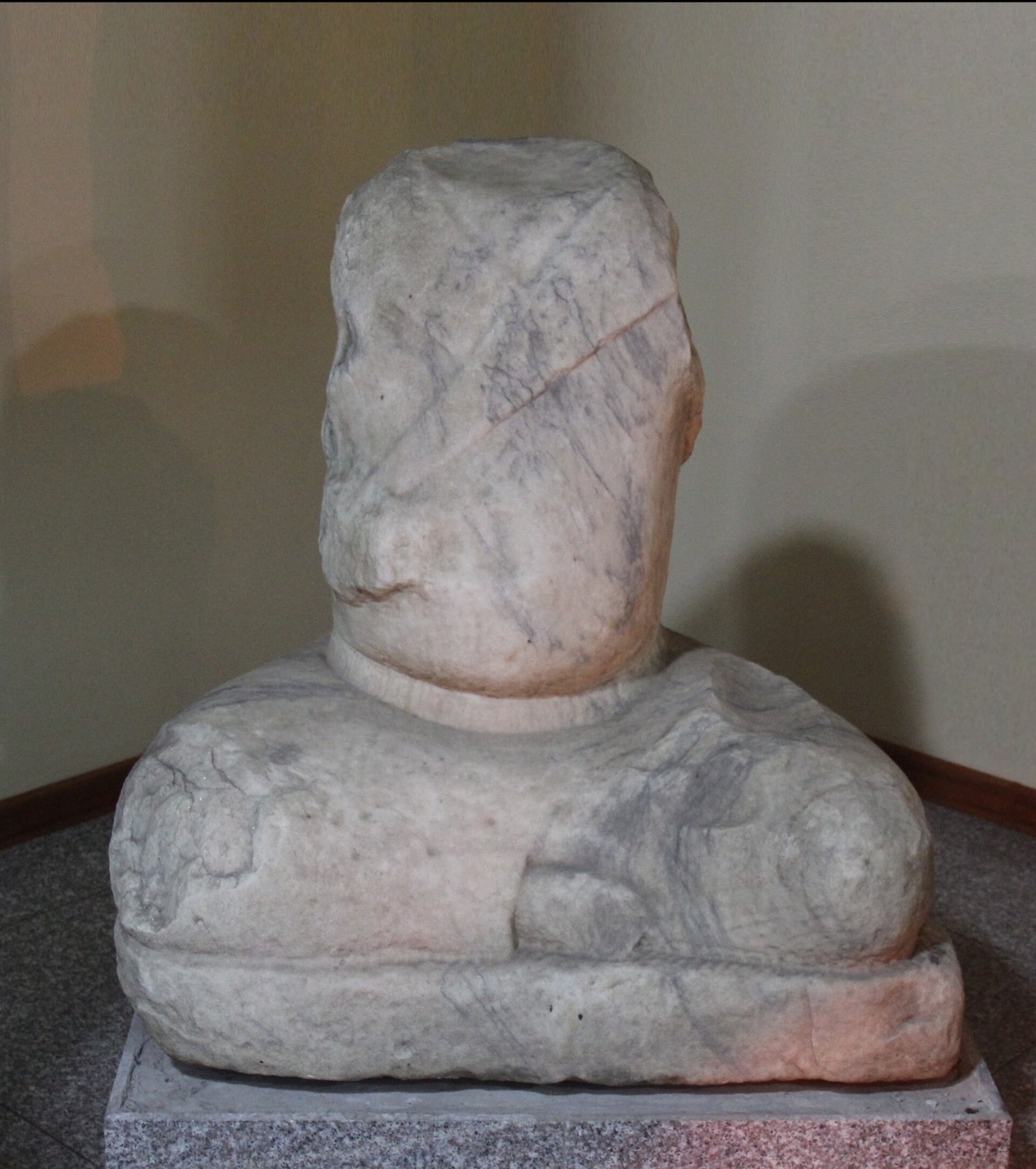
- A belt that matches a statue. A gold belt found in the complex has decoration similar to the belt shown on the Bilge Qaghan statue.
- A monument in three pieces. The inscription was moved to a museum building in 2000 for protection. It came in three parts and was joined and re-erected in 2001.
These details come from excavation and conservation work, not from the inscription text.
FAQ
Who was Bilge Qaghan?
He was a Turkic ruler from the Ashina dynasty and the fourth ruler of the Second Turkic Khaganate. Ahmet Taşağıl dates his reign to 716–734.
Did Bilge Qaghan really say “Turkish nation, tremble and return to yourself”?
The line depends on a translation. Thomsen translated the phrase in line 19 of the east face this way in 1924. Talat Tekin reads the same line as a call to give up bad habits and feel regret.
Where is Bilge Qaghan’s tomb?
It is in Mongolia, between the Orkhon River and Lake Khoshoo Tsaidam, about 50 kilometers from Karakorum. It lies about one kilometer south of the Kül Tigin complex.
Can you see the original inscription?
Not at its original spot. The Bilge Qaghan and Kül Tigin inscriptions were moved to the Göktürk Museum at Khoshoo Tsaidam for protection, and copies stand in their place.
How did Bilge Qaghan die?
Accounts based on Chinese sources say Buyruk Chor poisoned him, and he died on 25 November 734. His funeral took place on 22 June 735.
Sources
- Wikipedia — Bilge Qaghan en.wikipedia.org
- Türk Dünyası Ansiklopedisi — Bilge Kağan turkdunyasiansiklopedisi.gov.tr
- Belleten — Ölümünün 1250. Yıldönümü Münasebetiyle Bilge Kagan belleten.gov.tr
- Ankara Üniversitesi Açık Ders — I. ve II. Köktürk Kağanlığı acikders.ankara.edu.tr
- Hasan Bahar — The Excavation and the Conservation of Bilge Khan Monumental Grave Complex in Mongolia cipaheritagedocumentation.org
- Ahmet Yesevi Üniversitesi Türk Edebiyatı Eserler Sözlüğü — Bilge Kağan Yazıtı tees.yesevi.edu.tr
- Talat Tekin — Orhon Yazıtları (açıklama 202) elib.manas.edu.kg
- Talat Tekin — Orhun Yazıtları (sayfa 69) elib.manas.edu.kg
- Aksaray Üniversitesi — Bilge Kağan Anıt Mezar Kazıları tarih.aksaray.edu.tr
- UNESCO World Heritage Centre — Orkhon Valley Cultural Landscape whc.unesco.org
Image: Turkic 8th Century Marble Statue of Bilge Khan (35580731981).jpg — Gary Todd from Xinzheng, China, CC0