Almost every king of Egypt’s New Kingdom chose a hidden cliff tomb over a pyramid. The place they chose is the Valley of the Kings. This guide explains where it is, why the change happened, what the experts still argue about, and what you need to know before you visit.
The Valley of the Kings: where is it?
The Valley of the Kings is in Egypt, across the Nile from the city of Luxor. It sits on the west bank, in the ancient Theban necropolis. So if you ask “valley of the kings where in Egypt”, the answer is the west bank at Luxor.
The valley has two parts, an East Valley and a West Valley. Most of the tombs are in the East Valley. It was a royal burial ground during the 18th to 20th dynasties of the New Kingdom, roughly 1550–1069 BC.
It is also part of the site “Ancient Thebes with its Necropolis”, which entered the World Heritage List in 1979.
Who is buried there?
Pharaohs are the best-known burials. But some members of the royal family were also buried in the valley. So were high officials who were not royal.
The ministry’s inventory lists more than 60 tombs. It also counts about 20 unfinished attempts that were abandoned at the pit stage. That is a lot of digging in one narrow valley.
The first New Kingdom ruler certainly buried here, according to the ministry, is Thutmose I. He reigned around 1504–1492 BC.
Why did pharaohs abandon pyramids?
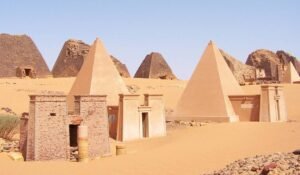
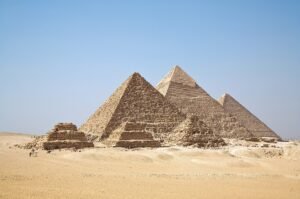
The official explanation is security. The ministry says the pyramids of the Old and Middle Kingdoms were plundered. Kings then chose a quiet valley and hidden underground tombs.
Think of it like moving your valuables out of the hall drawer where every visitor sees them and into a spot nobody knows about. A pyramid is the hall drawer. It is huge, it is obvious, and everyone knows what is inside.
A record from Thutmose I’s time supports the idea. Ineni, the official in charge of that king’s tomb, wrote that he directed the digging with no one seeing and no one hearing. Secrecy was a stated goal.
But the story is not that simple. Peter Der Manuelian of Harvard accepts that security played a role. He also says the exact reason pharaohs left pyramids is not known, and that there are several theories.
The other theories
Two more ideas appear in the debate.
Religion. In the New Kingdom, the king’s night journey through the underworld became more important. Tombs carved into solid rock may have suited that belief as an architectural answer.
Early royal tombs do show this journey. Their Amduat scenes describe the sun god travelling through the underworld during the 12 hours of the night.
Terrain. Aidan Dodson of the University of Bristol points to the narrow, rugged ground around Luxor. In his view it limited the space for new royal pyramids.
These ideas are not rivals. Several could be true at once.
What did the old symbols do?
The pyramid idea did not vanish. A natural hill shaped like a pyramid rises above the valley. It was read as a sacred feature that kept the pyramid’s symbol of rebirth.
The west bank mattered too. The Egyptians believed the sun died in the west and was reborn in the east. A burial place on the western side of the Nile fit that belief.
A new layout: tomb here, temple there
The burial changed in a practical way. In the Old and Middle Kingdom pyramid complexes, the cult temple and the burial chamber were linked. In Thebes, the New Kingdom layout separated them.
The king’s tomb was in the valley. The temple where his funerary cult continued stood at the edge of the farmland, far from the tomb. The secret place held the body. The public place held the rituals.
Timeline
- About 1550–1069 BC: The valley serves as a royal cemetery during the 18th–20th dynasties.
- About 1504–1492 BC: Thutmose I, the first ruler certainly buried in the valley, reigns.
- Roman period: Visitors already tour the valley.
- 1816: Giovanni Belzoni finds the Tomb of Ay in the West Valley.
- 1817: Belzoni finds Seti I’s tomb, KV17.
- 4–5 November 1922: Howard Carter’s team finds the first step leading down to Tutankhamun’s tomb, KV62.
- 1979: Ancient Thebes with its Necropolis joins the World Heritage List.
- 9 February 2006: The discovery of KV63 by a University of Memphis team is announced.
Valley of the Kings map
A good map helps, because the tombs are numbered rather than named. The Theban Mapping Project publishes a topographic map of the valley. It shows the position of the tombs, including KV62 and KV63. It also shows north and a scale in metres.
Download it before your trip. Then you can match each KV number to a place on the ground. The numbers are the standard way to name the tombs.
Discoveries: no single date
You cannot give the valley one modern discovery date. People visited it in the Roman period. The “discovery” came in stages.
Belzoni found the Tomb of Ay in 1816 and Seti I’s KV17 in 1817. In 1922 Howard Carter’s notes record the first step leading to Tutankhamun’s tomb. The notes place it in the events of 4–5 November 1922.
Later work continued. The University of Memphis team under Otto Schaden found KV63. Egypt’s Supreme Council of Antiquities announced it on 9 February 2006.
Did the hiding work?
Not really. Despite the concealment, almost all the tombs in the valley were opened and robbed in ancient times.
The workers who built and decorated these tombs lived in the village of Deir el-Medina. It lay between the Valley of the Kings and the Valley of the Queens. The people who knew where the tombs were lived close by.
Details you won’t find in guidebooks
- Tutankhamun’s tomb was not untouched. KV62 was robbed soon after it was sealed. Calling the 1922 find an intact tomb is not accurate.
- KV63 held no king. Its coffins and pottery jars contained natron, linen and embalming tools. It was an embalming deposit, not a royal burial.
- The brown spots in KV62 are no longer alive. Getty and Harvard research found the brown stains on Tutankhamun’s wall paintings are microbiological in origin. The organisms that made them are no longer alive.
- But the stains cannot be cleaned. They have sunk into the paint layer, so removing them would damage the paintings.
Valley of the Kings tickets and hours
On 25 October 2026 the official ministry page said the valley is open seven days a week, from 06:00 to 17:00.
For foreign visitors, the same page listed an adult ticket at 750 Egyptian pounds. A student ticket was 375 pounds. Prices can change, so check the ministry page again before you go.
If you are a student, bring your student card. It is the difference between the two prices.
Valley of the Kings, Luxor: how to think about your visit
Luxor is your base. The valley is on the other side of the Nile. Plan to cross to the west bank, and remember that the site closes at 17:00.
When you stand in the valley, look up at the pyramid-shaped hill. Then look at the narrow ground around you. You will see two of the ideas above at once: the old rebirth symbol and the cramped terrain.
Photos are what most people search for, but the numbered map will tell you more about what you are seeing. Pair the two.
FAQ
Where is the Valley of the Kings?
It lies on the west bank of the Nile, across the river from Luxor, in the ancient Theban necropolis in Egypt.
Why did pharaohs stop building pyramids?
Nobody knows the single cause. Security after the robbery of Old and Middle Kingdom pyramids is the official explanation. Religious beliefs about the king’s night journey through the underworld and the cramped terrain around Luxor are also proposed.
How much are tickets and when is the valley open?
On 25 October 2026 the official ministry page listed the valley as open every day from 06:00 to 17:00. It gave foreign adult tickets as 750 Egyptian pounds and student tickets as 375. Check the page again before you travel.
Was Tutankhamun’s tomb found untouched?
No. KV62 was robbed shortly after it was sealed, so the 1922 discovery was not a truly untouched tomb.
Who is the first king known to be buried in the valley?
According to the ministry, Thutmose I, who reigned around 1504–1492 BC, is the first New Kingdom ruler certainly buried there.
Sources
- Egyptian Ministry of Tourism and Antiquities, “Valley of the Kings” egymonuments.gov.eg
- Live Science, “Why did ancient Egyptian pharaohs stop building pyramids?” livescience.com
- University College London, “Tombs of the New Kingdom in Thebes” ucl.ac.uk
- English Wikipedia, “Valley of the Kings” en.wikipedia.org
- University of Oxford, Griffith Institute, Carter’s lecture notes, TAA i.12.04 tutankhamun.griffith.ox.ac.uk
- University of Memphis, “Valley of the Kings Tomb 63” memphis.edu
- Harvard University, “Valley of the Kings Tomb 63” whitelevy.fas.harvard.edu
- Getty Conservation Institute, “Scientific Investigation to Understand Issues in the Tomb” getty.edu
- Getty, “Egyptomania!” getty.edu
- Theban Mapping Project, Valley of the Kings map (PDF) thebanmappingproject.com
Image: Thebes, Luxor, Egypt, Valley of the Kings from above.jpg — Vyacheslav Argenberg, CC BY 4.0